When the team at the Locust Grove municipal office reached out to us, they already had high expectations. After years of trusting Wildcat Striping, Sealing & Paving with pavement maintenance, they needed a fresh, permanent roadway marking solution—and they knew we were the ones to deliver.
A Trusted Client, a Clear Request
Because this was a long‑standing relationship, we weren’t coming in cold.
Our history of dependable work gave us a head start: we already understood their standards, schedules, and priorities. So when they asked us to apply thermoplastic striping in critical traffic zones, we hit the ground running.
But the job was more than “paint the lines.” They wanted precision, durability, and a finish that would hold up under heavy wear. Their specifications included:
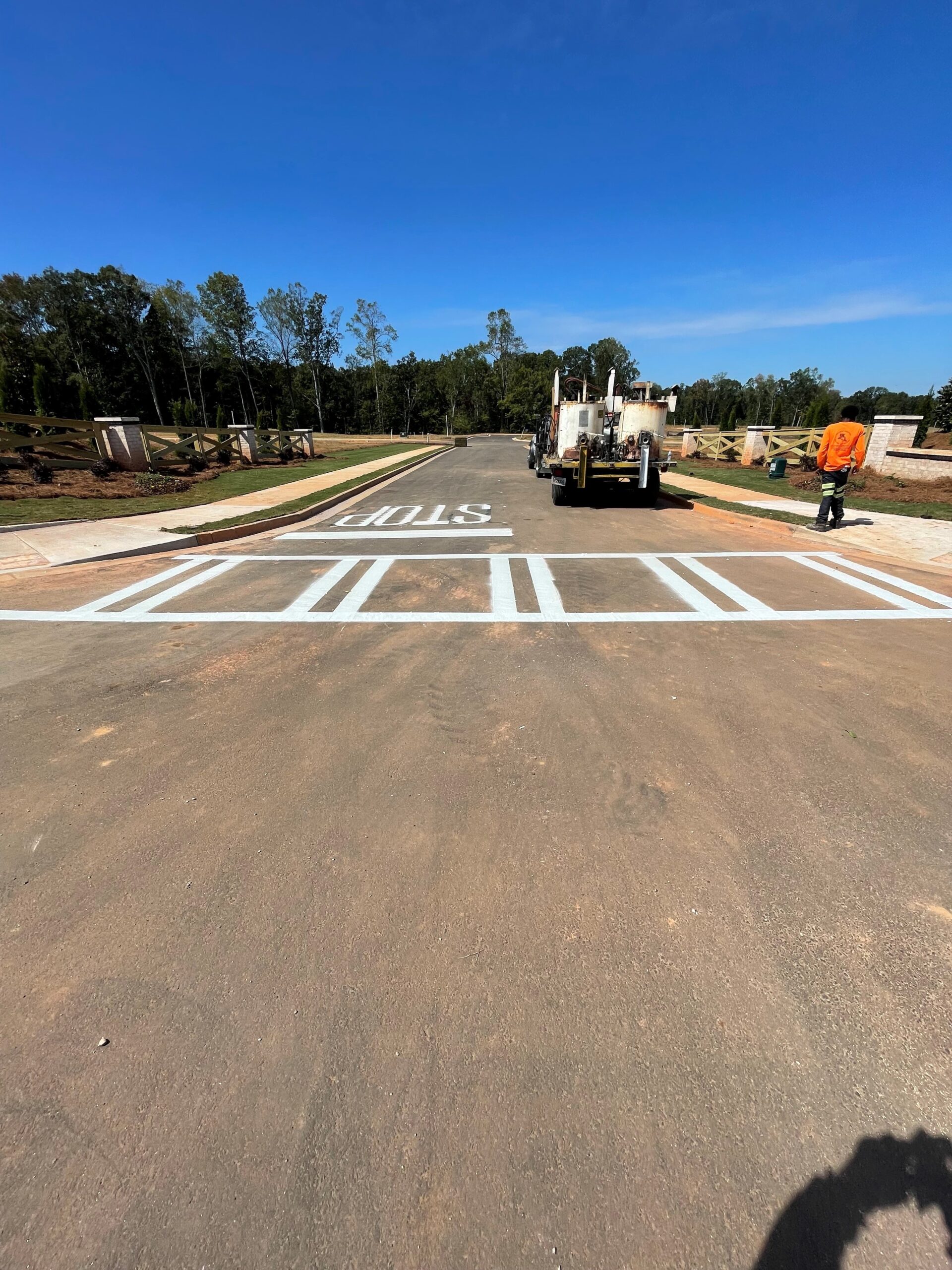
- Two (2) stop bars
- 150 feet of skip (dashed) line
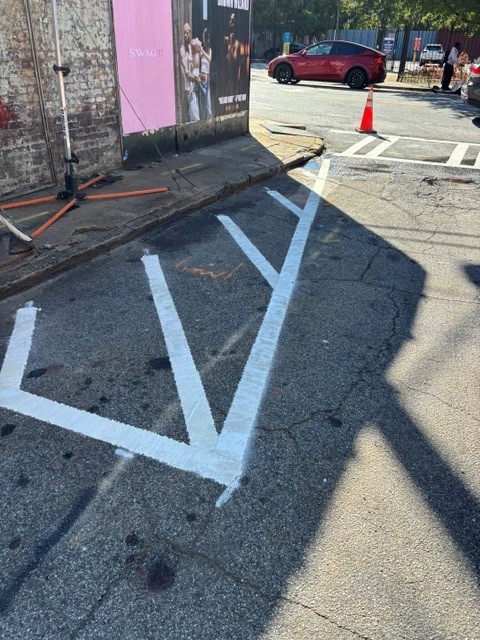
- Four (4) directional arrows
- 1,362 linear feet of 5‑inch continuous striping
- One mobilization only (i.e., one setup, no back‑and‑forth)
These were nonnegotiables. The client told us plainly: “We want it exactly right.”
The Challenges We Took On
Meeting High Expectations
In many jobs, clients leave room for “close enough.” Not here. The client wanted accuracy in spacing, alignment, and clarity. Slight misplacement or fading would not be acceptable.
Durability Under Stress
Locust Grove roads see traffic from local commuters, service vehicles, and occasional heavy trucks. Typical painted lines would wear quickly. We needed a more permanent solution.
One Mobilization Only
Because traffic interruptions are disruptive, especially in municipal zones, we had to plan to do it all in one continuous effort. Mistakes or delays would force rework or prolonged closures.
Thermoplastic Striping Done Right
Pre‑Job Planning
We conducted a site survey to validate measurements and traffic patterns. We coordinated timing with the city to ensure that our work window would minimize disruption during peak hours.
Material & Application
Thermoplastic is ideal for high-traffic roadways. It combines glass beads, pigments, and resins to create lines that resist abrasion, UV damage, and oil spills.
Using specialized striping machinery, we laid:
- Two stop bars at precisely measured distances
- 150′ of skip line, with consistent dash lengths and spacing
- Four arrows, crisp in shape and high in reflectivity
- 1,362′ of 5″ continuous striping that aligns perfectly with the roadway
We monitored temperature, ambient conditions, and curing time to ensure optimal bonding.
Quality Assurance
Once we completed the striping, we walked every section, verifying measurements, alignment, and reflectivity under different lighting. Any deviations were corrected immediately—no “we’ll fix that later.”
A Result That Hit the Mark
When the job was done, the Locust Grove team’s feedback was simple and direct: “Exactly what we wanted.”
They saw:
- Clean, highly visible lines and markings
- Consistent spacing and alignment
- Durable, long-lasting striping that stood up to early traffic
- Zero need for callbacks or rework
Because we mobilized only once, we minimized road closure time and inconvenience to the public.
Thinking of Thermoplastic Striping for Your Roads?
If your city, HOA, or public works team in Locust Grove or nearby needs crisp, long-lasting pavement striping done right the first time, reach out. We’ll survey your site, recommend designs, and execute with precision—just like we did for this project.
Let us make your roadways safer, cleaner, and more professional—one precise stripe at a time.