City Page Title

Archive for Announcements

ADA Parking Improvements Completed at Parking Deck J in Atlanta, GA

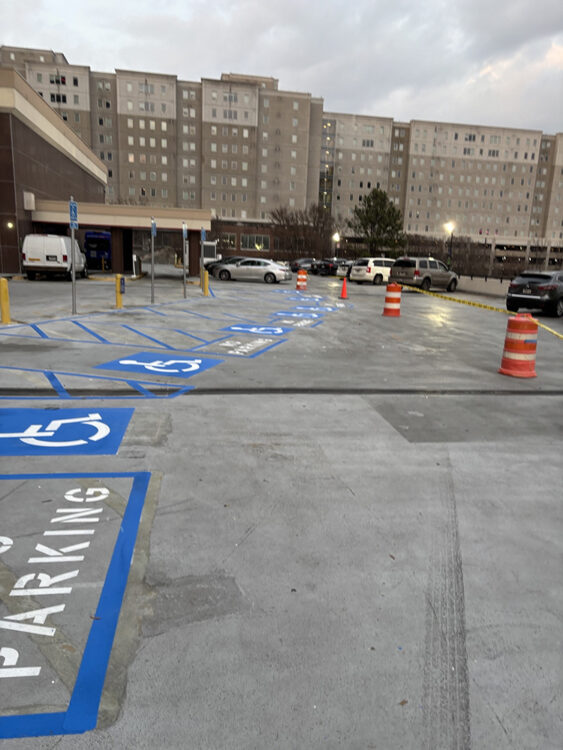
When a long-time customer reaches out, there is usually a reason. In this case, it was time to bring Parking Deck J in Atlanta, GA up to current ADA standards while keeping everything clean, clear, and on schedule. 

Our team at Wildcat Striping, Sealing & Paving was asked to handle parking area improvements across multiple levels, all priced and planned to be completed together for efficiency and consistency.

Clear Goals for a High-Use Parking Deck

Parking Deck J serves a steady flow of vehicles every day. The client needed clearly defined, compliant parking spaces that improved accessibility without disrupting daily operations. 

Because we had worked together before, there was already trust in our process and expectations around quality and timing.

The scope focused on the roof level and the loading dock level. Both areas required accurate layout and striping to meet ADA requirements while maintaining smooth traffic flow. Every measurement mattered. Every line needed to read clearly from a driver’s seat.

Detailed Striping and ADA Compliance Work

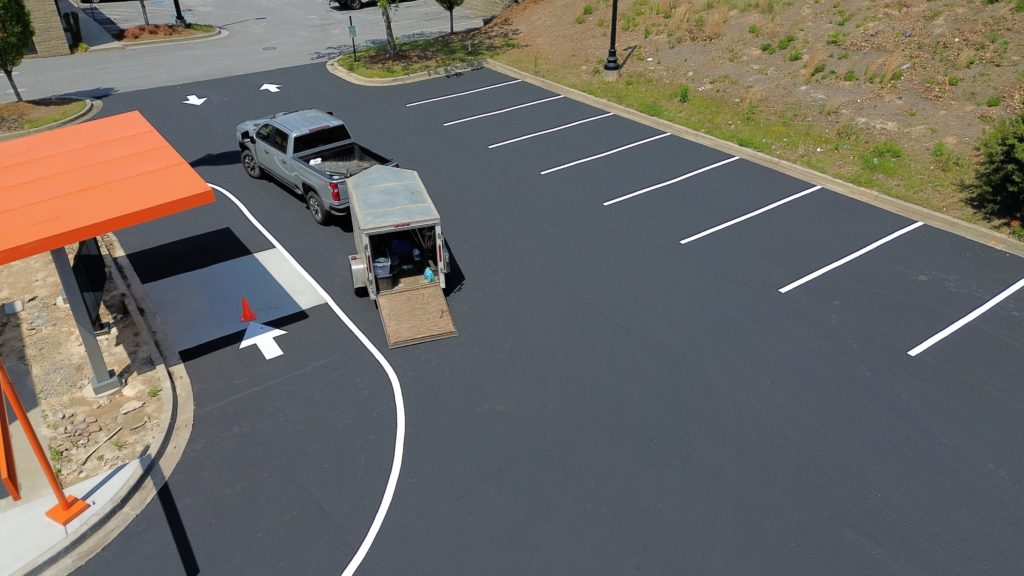
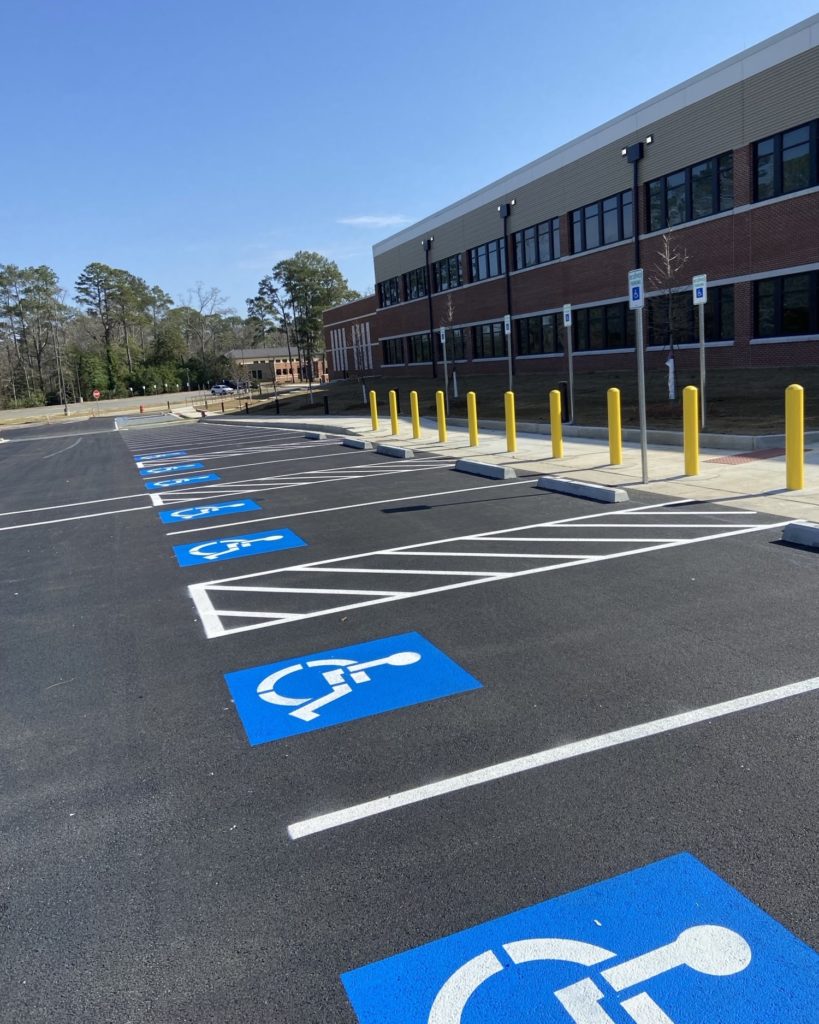
Our crew laid out and striped a total of 27 parking spaces across the designated areas. To meet accessibility standards, we applied 22 handicap logos, each placed for visibility and compliance. 

We also striped 13 access aisles and added 12 inch No Parking stencils to reinforce safety and keep access points open.

Two coats of paint were applied throughout the project, with reflective beads included to improve visibility in varying light conditions. This detail makes a real difference in a parking deck environment, especially during early mornings, evenings, or rainy Atlanta weather.

One mobilization covered the entire scope. All levels of Parking Deck J were priced to be completed together, allowing us to move efficiently from area to area and deliver a consistent finish throughout the deck.

Working Efficiently in Atlanta, GA

Atlanta parking structures present their own challenges. Traffic patterns, tight timelines, and coordination with property operations all play a role. Our experience with parking decks across Atlanta, GA helped us plan the work carefully and execute without unnecessary delays.

Because the client needed the job completed on time, our team stayed focused on sequencing and clean execution. Layout, striping, logos, and stencils were handled methodically so nothing had to be revisited later.

“Wildcat does a great job and gets it done on time.”

That feedback reflects exactly what we aim for on projects like this.

Serving Atlanta Property Owners with Reliable Striping

We work with long-time clients and new partners across Atlanta, GA to deliver parking area improvements that hold up to daily use. From ADA layouts to full deck striping, our team focuses on doing the work right and finishing on schedule.

If you manage or own a property in Atlanta, GA and need ADA parking improvements, clear striping, or a refresh for an aging parking deck, now is the time to act. 

Request a quote or schedule a site visit with our team to see how we can improve safety, visibility, and compliance at your property.

Improving Roadway Visibility With Thermoplastic Striping in Cumming, GA

Clear pavement markings do more than guide traffic. In a growing city like Cumming, GA, they help reduce confusion, protect pedestrians, and keep projects moving forward on schedule. 

That was the focus when a long-time customer reached out to us at Wildcat Striping, Sealing & Paving for thermoplastic traffic striping work across deceleration lanes and rights of way in Cumming.

We have worked together for years, so expectations were clear from the start. The client needed durable, highly visible markings installed efficiently, with careful attention to layout and safety standards. Our role was to deliver clean lines, consistent spacing, and dependable coordination from start to finish.

Laying Out a Complex Striping Plan in Cumming, GA

This project required more than repainting existing lines. The scope included full layout and application of thermoplastic markings across multiple traffic features. 

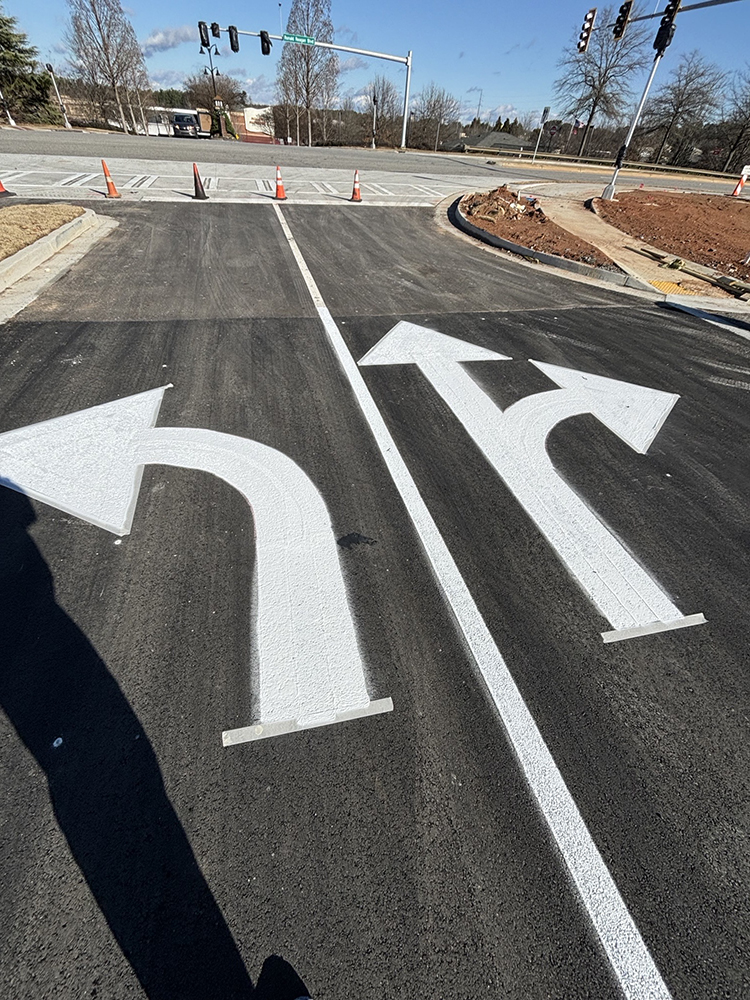
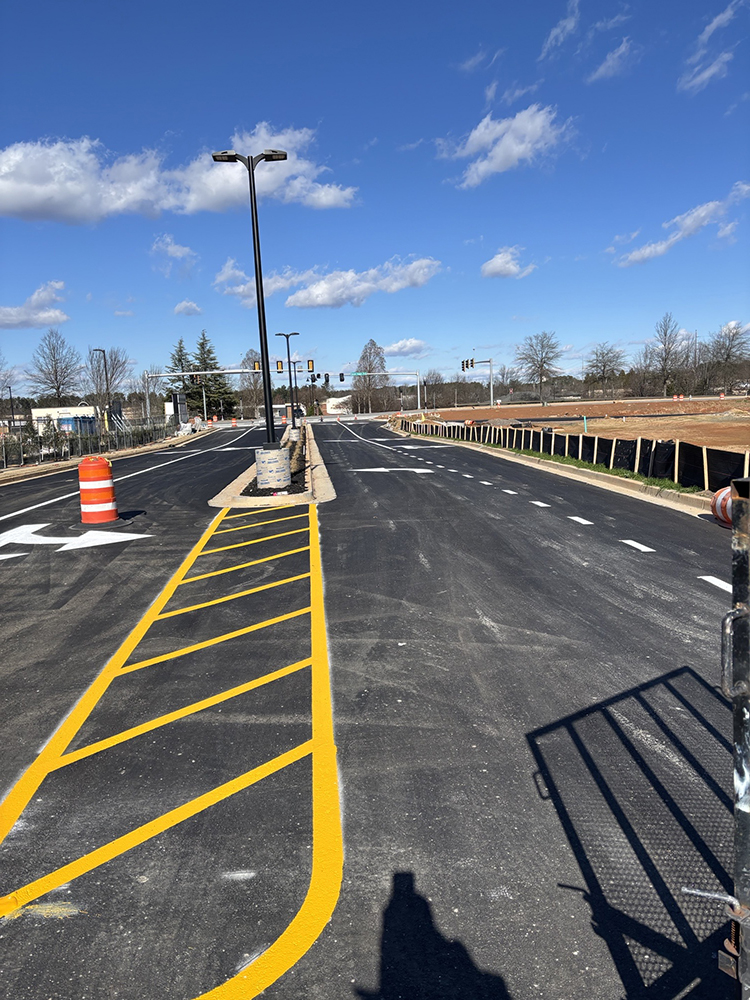
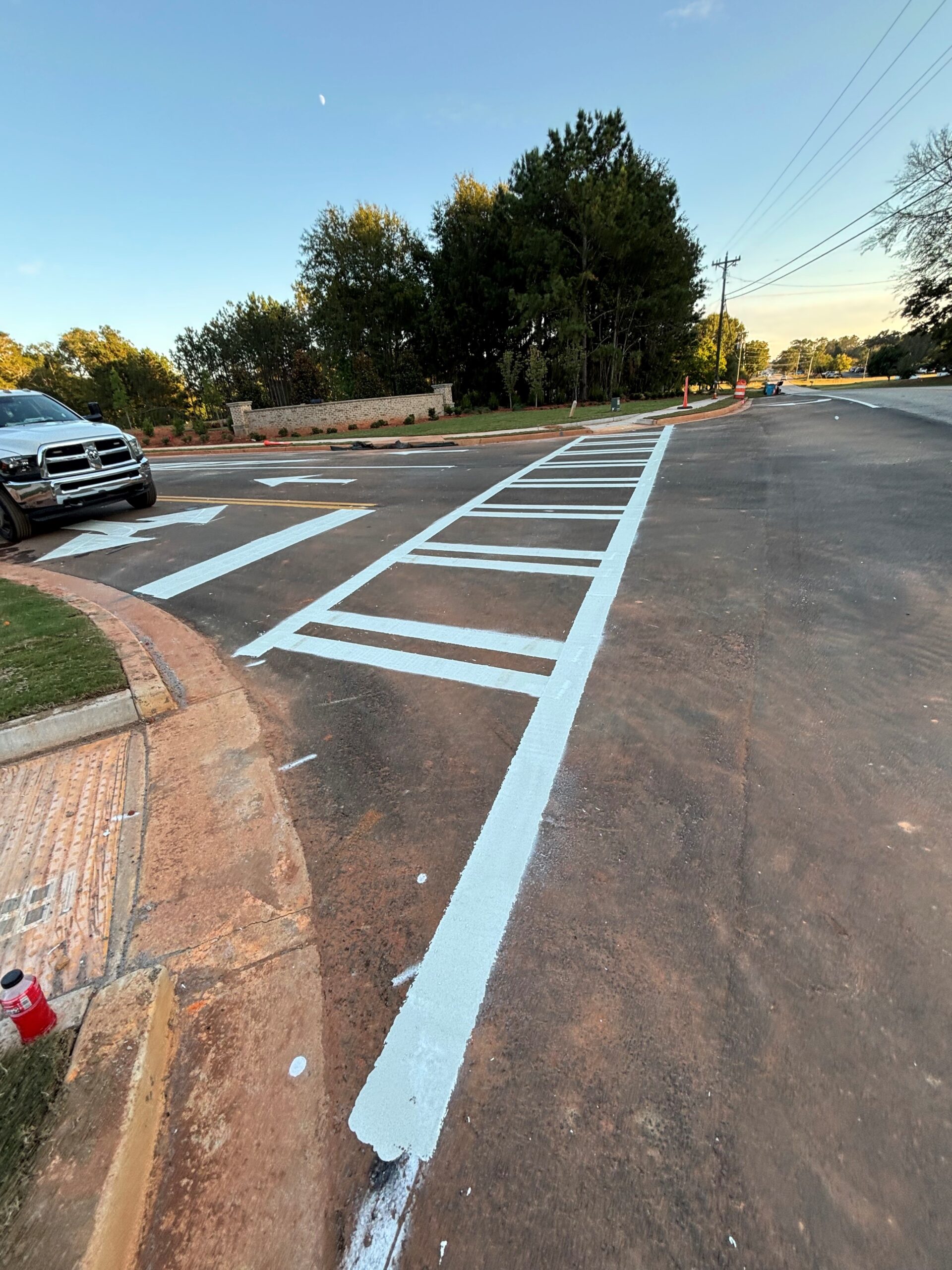
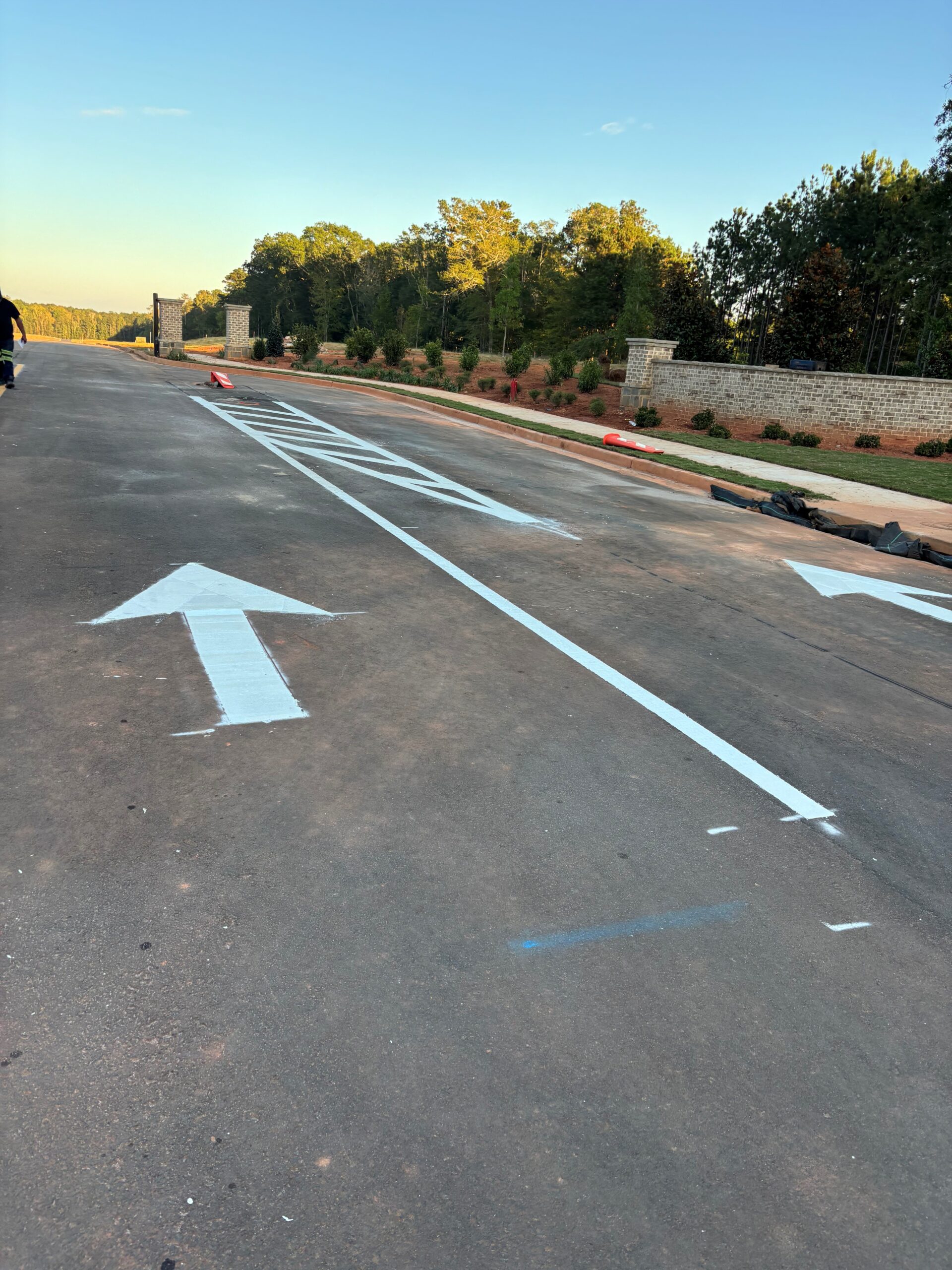
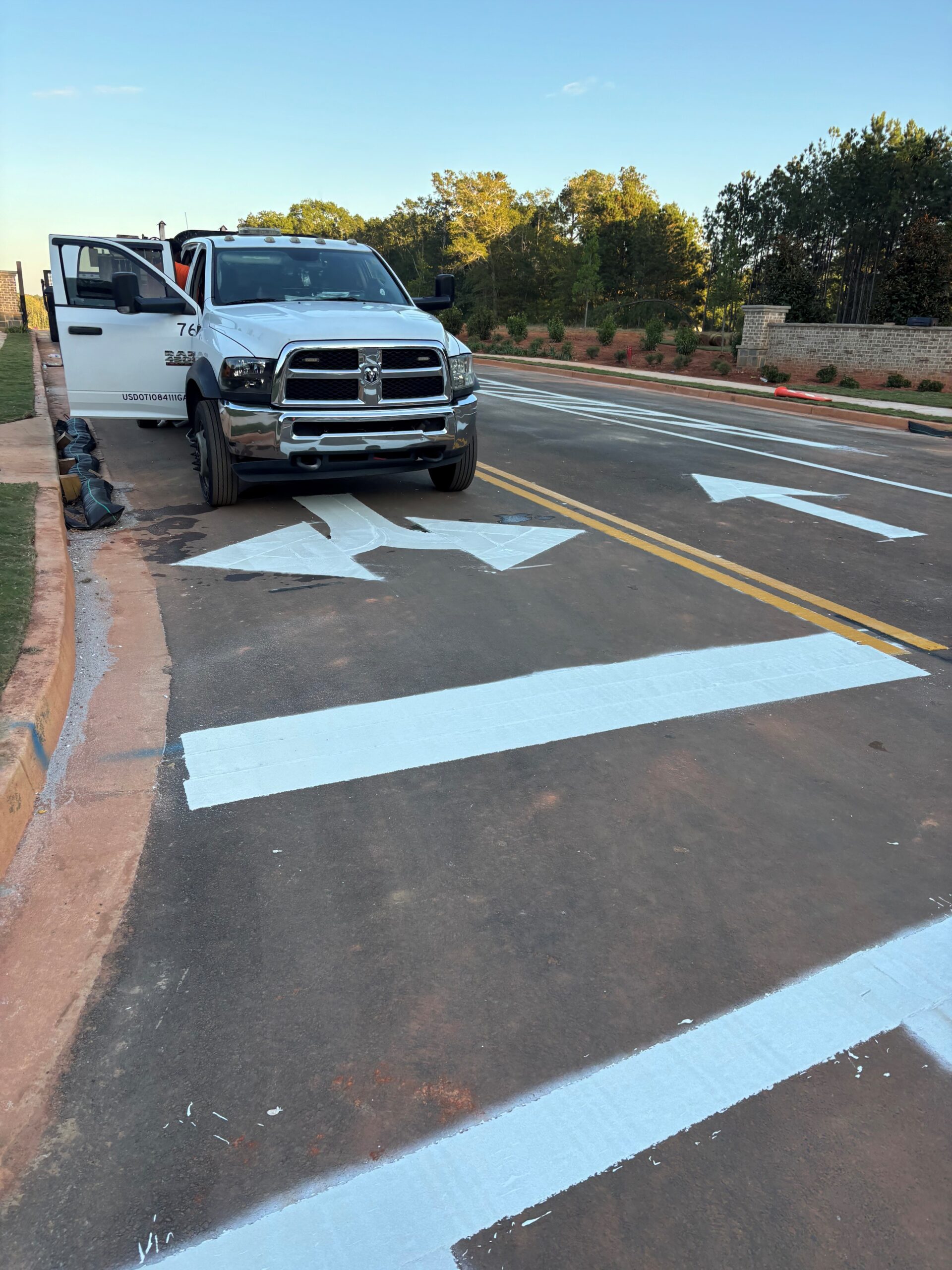
In total, we installed 5 crosswalks, 10 single arrows, 1 double arrow, 450 ft of skip striping, and 3,030 ft of 5-inch white lines. We also completed 8 white gore areas, 1 yellow gore area, and 5 stop bars.

On top of that, we installed raised pavement markers on the turn lane as needed to enhance visibility, especially during low-light and wet conditions. With multiple elements spread across deceleration lanes and rights of way, precision mattered at every step. Each marking had to align properly with traffic flow and surrounding infrastructure.

Cumming continues to see steady development, and roads here handle a mix of commuter traffic, local drivers, and service vehicles. That local context guided how we approached layout and sequencing, keeping safety and efficiency front and center.

Behind the Scenes: Preparing Concrete for Thermoplastic

Part of this project involved applying thermoplastic on concrete surfaces. As communicated up front, thermoplastic on concrete carries no warranty. Even so, surface preparation can make a real difference in performance.

To support better adhesion, we etched and primed the concrete before application. This extra preparation helps the material bond more effectively, especially in high-traffic areas like decel lanes. 

The scope excluded preformed thermoplastic, contrast striping, and contrast tape, which allowed us to focus fully on delivering consistent standard thermoplastic markings across the site.

Careful prep work often goes unnoticed once traffic returns, yet it plays a big role in how the finished product holds up over time.

Professional Results Delivered on Time

The feedback from the client said it all. 

“Wildcat is very professional and gets it done on time.” 

For a long-standing customer, that kind of response confirms we met the mark again.

From layout to final application, our crew stayed coordinated and focused. The finished markings improved clarity through crosswalks, turn lanes, and gore areas, supporting safer navigation for drivers and pedestrians alike.

Serving Cumming, GA With Reliable Traffic Striping

We take pride in supporting infrastructure projects throughout Cumming and the surrounding area. Thermoplastic traffic striping remains one of the most effective ways to deliver long-lasting visibility when installed with care and experience.

If you manage a roadway, commercial property, or development project in Cumming, GA and need professional thermoplastic striping, our team is ready to help. Reach out to schedule a site review and layout plan, and let us keep your project moving forward with clear, durable markings you can rely on.

Refreshing the First Impression at a Snellville Property With Crisp Curb Painting

A main entrance says a lot before anyone steps out of their car. 

In Snellville, GA, that first impression mattered to a long-time customer who asked us to take a fresh look at their curb lines and entrance flow. They had worked with us before and trusted our team at Wildcat Striping, Sealing & Paving to tighten up the details that visitors notice right away.

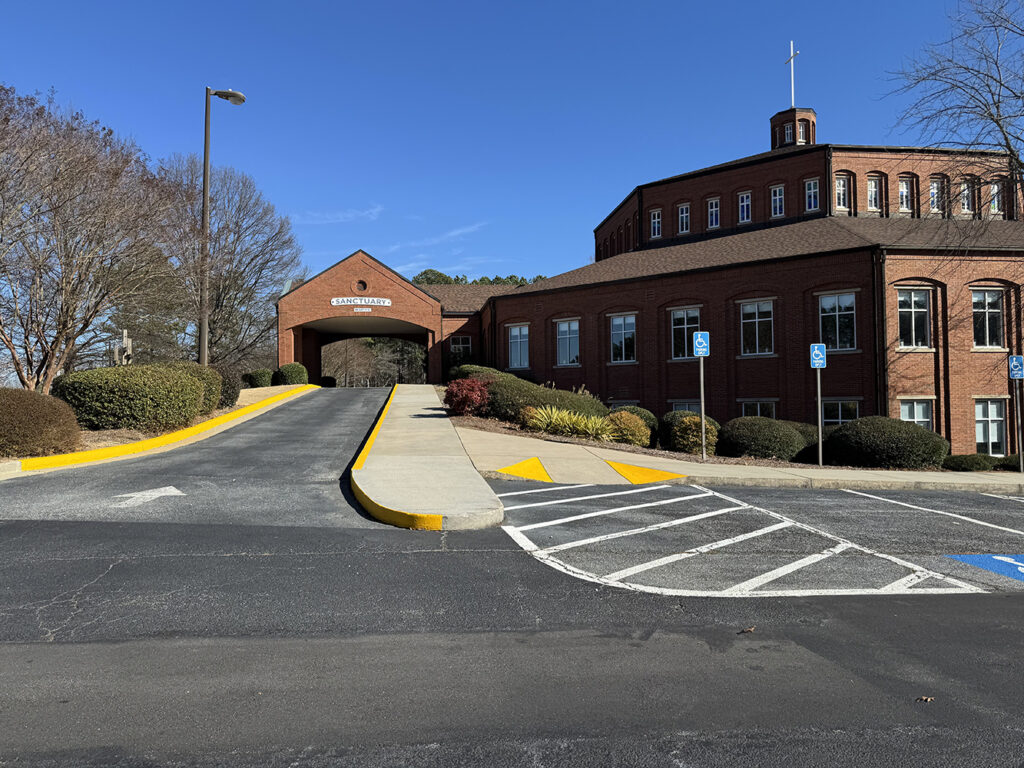
This project focused on one clear goal. Improve the appeal of the main entrance and make it look clean, intentional, and well cared for. Sometimes small upgrades carry real visual weight, especially in high-traffic areas.

A Familiar Property and a Clear Goal

Because this client was already familiar with our work, the conversation started easily. They knew what we do, and we understood their expectations. The issue was not damage or compliance. It was presentation. Over time, curb paint fades, chips, or loses contrast, especially in a busy entrance where vehicles slow down, turn, and stop.

In Snellville, properties see a mix of local traffic and visitors. A worn curb line can make an entrance feel neglected even if the rest of the site looks solid. The client wanted a sharper look that matched the care they put into the rest of the property.

Our role was to restore clarity and visual structure with professional curb painting that framed the entrance the right way.

Our Curb Painting Process in Snellville

Curb painting may sound simple, but the difference between an average result and a strong one comes down to preparation and consistency. We approached this Snellville project with the same care we bring to larger striping and paving jobs.

We focused on clean edges, even coverage, and a finish that would stand up to daily use. The goal was to create contrast that guides drivers naturally while also elevating the overall look of the entrance.

Because this was a main entry point, we paid close attention to how the curb paint interacted with the surrounding pavement and traffic flow. Everything needed to look intentional and balanced from multiple angles.

The Visual Impact After Completion

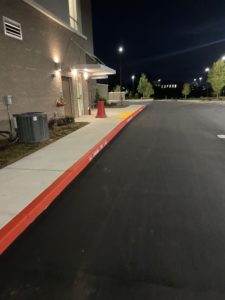
Once the curb painting was complete, the entrance felt refreshed. The lines were clear, the color popped, and the space felt more welcoming. This kind of update often flies under the radar until it is done, then suddenly it feels essential.

The client noticed immediately and shared positive feedback that meant a lot to our crew.

They told us, “Wildcat does a GREAT Job!!!”

That reaction reinforced what we see often in Snellville and surrounding areas. Improving entrance appeal does not always require a major overhaul. Targeted improvements can deliver strong results fast.

Ready to Improve Your Entrance in Snellville, GA?

If your property entrance looks tired or faded, curb painting can be a smart next step. Our team works with property owners across Snellville, GA to sharpen first impressions and keep sites looking their best.

Reach out today to schedule a visit or request a quote for curb painting in Snellville. Taking action now helps your entrance stand out and stay that way.

Emergency Guide: When Your Business Needs Parking Lot Sealcoating After Severe Weather

Severe weather in Decatur does not just disrupt operations for a day or two. It quietly accelerates damage across commercial parking lots, especially along high-traffic corridors like Memorial Drive, Covington Highway, and near I-285 access points.

Heavy rain, heat swings, and sudden cold snaps break down asphalt faster than many property managers expect. This guide explains exactly when sealcoating becomes urgent after severe weather and how to prepare your site so the work restores protection, not just appearance.

Below, we walk through the warning signs and the preparation steps that help you avoid deeper pavement failures, failed inspections, and liability exposure.

Key Takeaways

  • Severe weather accelerates asphalt failure through moisture intrusion, oxidation, and chemical spread.
  • Standing water, fading, and expanding cracks signal the need for urgent sealcoating.
  • Proper preparation includes evaluation, repairs, access planning, and weather coordination.
  • Sealcoating after storms protects pavement, supports compliance, and reduces long-term costs.

Standing Water After Heavy Rain

After major rain events, pooling water is often the first red flag.

In Decatur, sudden downpours overwhelm drainage around older commercial lots, especially near flat parcels common in light industrial areas. When water sits for hours instead of draining, it penetrates unprotected asphalt and accelerates oxidation from the inside out.

Sealcoating becomes urgent at this stage because it restores a waterproof barrier before subbase damage turns into widespread cracking or potholes.

Surface Fading and Asphalt Drying

Extreme summer heat followed by storms causes rapid surface oxidation. You will notice the asphalt turning gray, chalky, or brittle, particularly in open lots without shade near major roadways like Scott Boulevard.

This fading is not cosmetic.

It signals that oils binding the asphalt are breaking down.

Sealcoating after this type of weather cycle replenishes surface protection and slows further deterioration that leads to raveling and aggregate loss.

Expansion of Existing Cracks

Small cracks that seemed stable before a storm often widen afterward.

Temperature swings and moisture intrusion force cracks to expand, especially in high-load areas like delivery lanes or dumpster pads. In Decatur’s climate, freeze-thaw cycles are limited but still impactful during winter cold snaps.

Sealcoating becomes necessary once crack sealing is completed, locking out moisture and preventing those cracks from spreading under traffic.

Oil and Chemical Contamination Spread

Severe weather spreads contaminants.

Rainwater carries oil, fuel, and hydraulic fluids across the lot, pushing them deeper into the asphalt surface. This is common near service bays, loading docks, and gas-adjacent retail sites. Once these chemicals soften the asphalt binder, deterioration accelerates.

Sealcoating after storms encapsulates the surface and reduces further chemical penetration, protecting structural integrity.

Loss of Traction and Safety Risks

After storms, some lots develop slick or uneven surfaces, especially where aggregate has loosened. For commercial properties, this creates immediate liability exposure. ADA-accessible routes, fire lanes, and pedestrian crossings must remain safe and compliant.

When weather damage compromises the traction or visibility of pavement markings, sealcoating combined with restriping becomes an operational priority rather than a deferred maintenance task.

How to Prepare for Professional Sealcoating Services

Before any sealcoat goes down, a clear plan matters just as much as the product itself.

Severe weather exposes weak spots fast, and the steps below help ensure the work actually protects your pavement, stays compliant, and minimizes disruption to daily operations.

Schedule a Post-Storm Pavement Evaluation

The first step is a professional evaluation once conditions are dry. We assess surface oxidation, crack patterns, drainage behavior, and load stress areas common to your property type, whether that is a shopping center near downtown Decatur or a warehouse off Columbia Drive.

This evaluation determines whether sealcoating alone is appropriate or if crack sealing and minor repairs are required first.

Address Crack Sealing and Spot Repairs

Sealcoating is not a fix for structural failures. Cracks, potholes, and edge breakdown must be repaired in advance. After severe weather, these issues often appear rapidly, especially along curb lines and utility cuts.

Completing asphalt repairs first ensures the sealcoat bonds correctly and delivers its full service life rather than failing prematurely.

Coordinate Access, Traffic, and Tenants

Commercial sealcoating requires planning. Tenants, deliveries, and customer access all need coordination. In Decatur, many properties operate under tight parking constraints, especially near transit corridors and mixed-use developments.

We help stage the work in phases, maintain fire lane access, and schedule during off-hours or weekends to minimize business disruption.

Confirm Weather Windows and Cure Times

Sealcoating is weather-sensitive.

After storms, humidity levels and overnight temperatures matter as much as rainfall. In Metro Atlanta, sudden weather shifts are common, so confirming a stable window is critical. Cure times typically range from 24 to 48 hours, depending on the product and conditions.

Planning around these windows prevents tracking, scuffing, and uneven finishes that compromise performance.

Plan Striping and Compliance Updates

Sealcoating often removes existing striping. This creates an opportunity to correct layout issues, refresh ADA markings, and update fire lanes to meet local code and inspection requirements.

Many commercial properties in DeKalb County fail inspections due to faded markings rather than structural pavement issues. Scheduling restriping immediately after sealcoating restores visibility and compliance in one coordinated process.

Schedule Emergency Sealcoating Support in Decatur

Severe weather does not wait for your maintenance calendar. When storms expose weaknesses in your parking lot, delaying action increases repair costs, inspection risks, and liability. At Wildcat Striping, Sealing & Paving, we help Decatur businesses stabilize their pavement quickly with clear assessments, phased scheduling, and weather-aware execution.

Call us to schedule a post-storm evaluation and secure a sealcoating plan that protects your lot before minor damage becomes a capital expense.

Frequently Asked Questions

How soon after a major storm should sealcoating be scheduled?

Once the surface is fully dry, evaluations can typically occur within a few days. Timing depends on humidity, temperatures, and storm severity, but acting quickly prevents moisture from settling deeper into the asphalt structure.

Does sealcoating fix drainage problems caused by storms?

Sealcoating improves surface protection but does not correct grading or structural drainage issues. During evaluations, drainage deficiencies are identified so corrective measures can be planned alongside protective treatments.

Will my business need to close during sealcoating?

Full closure is rarely required. Most commercial projects in Decatur are phased to maintain access for tenants, deliveries, and emergency routes while allowing proper cure times.

Are there regulations that affect post-storm pavement work?

Local fire lane visibility, ADA access routes, and parking layout requirements must remain compliant. Coordinating sealcoating with restriping helps meet DeKalb County inspection expectations after weather-related wear.

Understanding The Parking Lot Sealcoating Process From Start To Finish

Smyrna sealcoatCommercial property owners across Decatur see how quickly heat, afternoon storms, and heavy traffic wear down an unprotected parking lot. The mix of summer humidity around Oakhurst and delivery-truck weight near East Lake often speeds up cracking and fading. Sealcoating gives your asphalt the protection it needs, but many facility managers want a clear roadmap of what actually happens from start to finish.

The full process follows a predictable flow, and knowing it helps you plan around tenants, customers, and business hours. That clarity leads directly into the core steps you can expect on any commercial project in Decatur.

Key Takeaways

  • Sealcoating extends the life of a commercial parking lot in Decatur’s climate.
  • Repairs and prep work before sealing keep moisture out and improve durability.
  • Proper planning reduces downtime for tenants and customers.
  • Weather timing and communication drive a smooth, successful project.

Steps in the Complete Parking Lot Sealcoating Process

We follow a structured sequence that prepares, seals, and protects your lot so it performs well in Decatur’s climate.

Surface Cleaning and Debris Removal

Crews start by clearing every loose material so the sealer can bond properly to the asphalt. Sweeping and high-pressure air cleaning keep grit and leaves from spots like South Candler Street from interfering with adhesion.

Commercial lots with heavy tree cover near Glenwood Estates often need extra passes because pollen and small debris settle fast. A clean surface gives your coating an even look and a longer lifespan.

This step sets the foundation for every layer that follows.

Asphalt Repairs and Crack Sealing

Cracks spread quickly in Decatur due to moisture that seeps in before afternoon temperature swings tighten and loosen the pavement. Hot rubberized crack sealant fills these gaps so water stays out, especially in loading zones or drive lanes where trucks turn sharply.

Lots built in the 1980s around Medlock Park often show fatigue cracking that needs patching before any coating goes down. Repairing these issues protects your base layer from long-term structural damage.

Solid repairs ensure the sealcoat protects instead of covering problems.

Oil Spot Treatment and Surface Priming

Oil from delivery vehicles and fleet vans weakens the bond between asphalt and sealer.

We apply primer on these spots so the final coating spreads evenly across busy areas like Church Street. Older commercial centers closer to downtown Decatur sometimes show years of oil buildup that need deep treatment.

This bonding layer prevents peeling and early wear.

Proper priming keeps your finished lot consistent in color and durability.

Application of First Sealcoat Layer

The first coat goes down in thin, uniform passes so it cures correctly in Decatur’s heat.

Our crews often work early mornings near North Decatur Road to avoid peak temperatures that slow curing. Commercial lots with wide open sun exposure need careful timing for smooth application. This layer penetrates the asphalt and helps lock in moisture resistance.

A steady pace keeps the first coat even across high-traffic sections.

Curing Period Before Second Coat

The gap between coats gives the sealer time to harden and settle.

Humidity around Avondale Estates can extend this window, so teams monitor surface temperature and moisture throughout the day. Vehicles must stay off the lot to avoid tracking marks or peeling. Allowing proper curing creates a stronger finish.

Patience during this phase delivers better long-term performance.

Application of the Second Sealcoat Layer

The second layer builds overall thickness and strengthens the protective barrier. This coat adds the rich, dark finish commercial properties prefer for a clean first impression.

Areas with turning movements, like entrances along College Avenue, benefit from the added durability. Consistent coverage across all sections reduces early wear. The completed layers help your pavement handle Decatur weather for years.

Restripe and Reopen the Lot

Fresh striping restores ADA stalls, fire lanes, walkways, and traffic flow patterns. Properties near local schools often need tight scheduling so staff and visitors can return quickly. Crisp lines improve safety and help customers navigate without confusion.

After final drying, the lot reopens and traffic resumes. The result is a darker, smoother, and more durable surface that looks new again.

How To Plan for a Successful Sealcoating Commercial Project

Strong planning keeps your commercial sealcoating project on schedule and reduces disruptions for tenants, customers, and delivery traffic across Decatur.

The steps below outline the core planning actions that help your lot stay accessible, and your operation run smoothly from start to finish.

Coordinate Parking and Traffic Flow

A clear traffic plan helps customers and tenants move safely while sections of the lot are closed. Multi-tenant buildings near Decatur Square often need phased closures so each business stays accessible. Creating alternate routes keeps delivery trucks and service vehicles moving.

This planning helps prevent bottlenecks and safety issues. Simple signage and temporary cones guide everyone smoothly through the process.

Communicate Project Timing With Stakeholders

Early communication gives property managers, tenants, and visitors time to adjust. Complexes around DeKalb Industrial Way rely on scheduled announcements to keep drivers from entering work zones. Notifying staff reduces confusion on the start day.

Consistent updates help everyone stay aligned with the timeline. Clear communication builds trust and reduces last-minute issues.

Schedule Work Around Local Weather

Sealcoating needs dry conditions, so Decatur’s summer storms influence project timing. Afternoon thunderstorms in July often lead crews to start earlier in the day to avoid washouts. Surface moisture from overnight humidity also affects start times.

Monitoring weather helps crews choose the right application window. Planning around these patterns keeps your project on track.

Prepare the Lot for Contractor Access

Open access allows crews to move equipment, clean surfaces, and apply coatings smoothly.

Lots with limited entrances, especially near older commercial strips by West Howard Avenue, need special staging plans. Removing parked fleet vehicles and clearing dumpster areas improves workflow. Proper prep avoids delays once crews arrive.

A ready site speeds up production and reduces downtime.

Secure Permits and Meet Local Requirements

Some commercial sites in Decatur must meet specific requirements for ADA markings, fire lanes, and property access.

City guidelines may also dictate certain layout features for high-traffic areas. Older properties near East Decatur Station sometimes need updated striping plans to stay compliant. Meeting these standards keeps your site safe and avoids corrections later.

Compliance also protects your investment in the new coating.

Get A Smooth, Protected Parking Lot

You want a lot that looks sharp, handles traffic, and lasts through Decatur’s weather patterns. High heat, rain, and daily vehicle stress all take their toll, and ignoring maintenance creates higher costs down the road. Fresh sealcoating protects your pavement and gives your property a polished, professional appearance.

At Wildcat Striping, Sealing & Paving, we handle every step from planning to final striping with a commercial-first approach. We help you schedule the work, protect your asphalt, and minimize downtime. Reach out today to schedule service or request a detailed quote so your project moves forward on your timeline.

Frequently Asked Questions

How often should I sealcoat my commercial lot in Decatur?

Most commercial properties in Decatur benefit from sealcoating every two to three years since heat and summer storms speed up surface wear and fading.

Can my business stay open while the lot is being sealed?

Our crews usually break commercial lots into phases so businesses along the project area stay accessible, and this approach works well for multi-tenant centers.

What if parts of my lot have heavy truck traffic?

Heavily loaded areas near loading docks or service bays often need a thicker second coat and earlier crack repairs to stand up to constant turning pressure.

How long does the striping last after sealcoating?

Most commercial striping holds up for one to two years in Decatur traffic, especially when lots follow regular sweeping, drainage checks, and routine maintenance.

Precision Traffic Striping and DOT Upgrades Delivered in Cumming, GA

The moment our crew at Wildcat Striping, Sealing & Paving stepped onto this busy Cumming, GA, property, we knew our long-time customer needed a clean, organized traffic flow that could handle daily volume without confusion.

They had a long list of updates in their parking areas and adjacent roadways, and they needed a contractor who could manage every detail from layout to final markings with accuracy.

Addressing a Large Scope with Careful Planning

This project involved a mix of traffic paint striping, thermoplastic work, and DOT-regulated sign installations. Large commercial sites in Cumming often serve several buildings on one campus, which means traffic patterns must be clear for drivers, pedestrians, and delivery vehicles.

Our client asked us to refresh and reorganize their markings so visitors could move safely through the property.

We began with the parking areas. Our team laid out and striped 448 parking spaces along with 19 handicap logos and 10 access aisles.

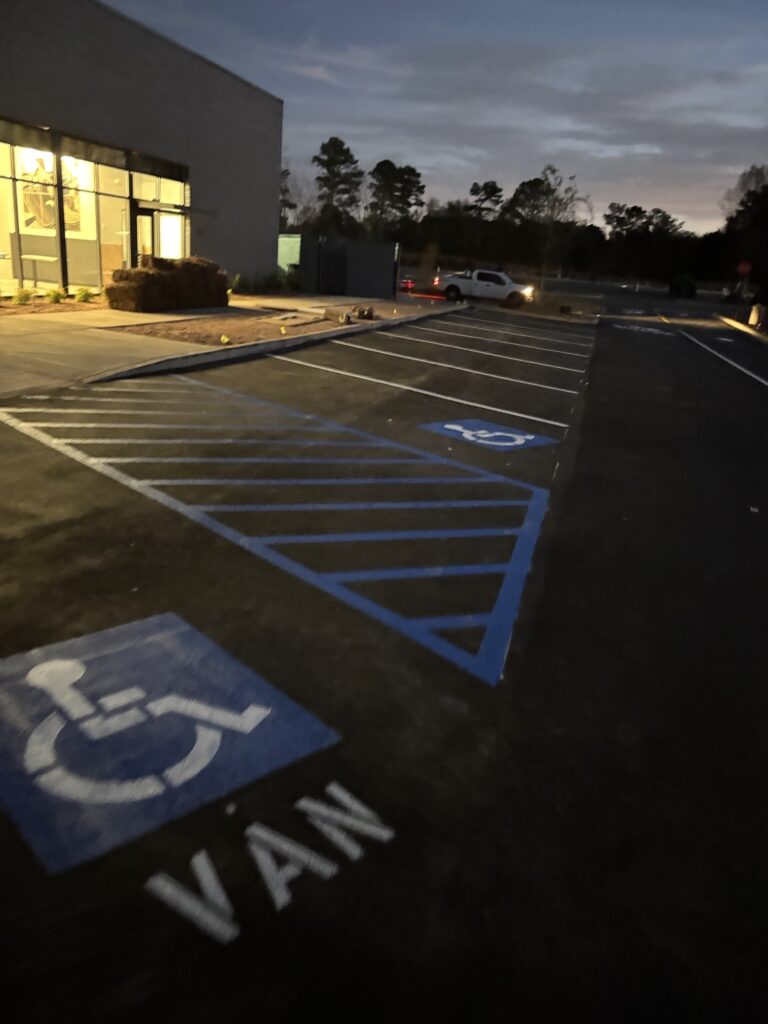
Since accessibility is a major priority for property owners in Georgia, we took extra care to ensure the ADA stencils, 7 VAN markings, and multiple crosshatched areas were positioned and painted with precision. We also added 6 EV logos to support the growing number of electric vehicle drivers in the region.

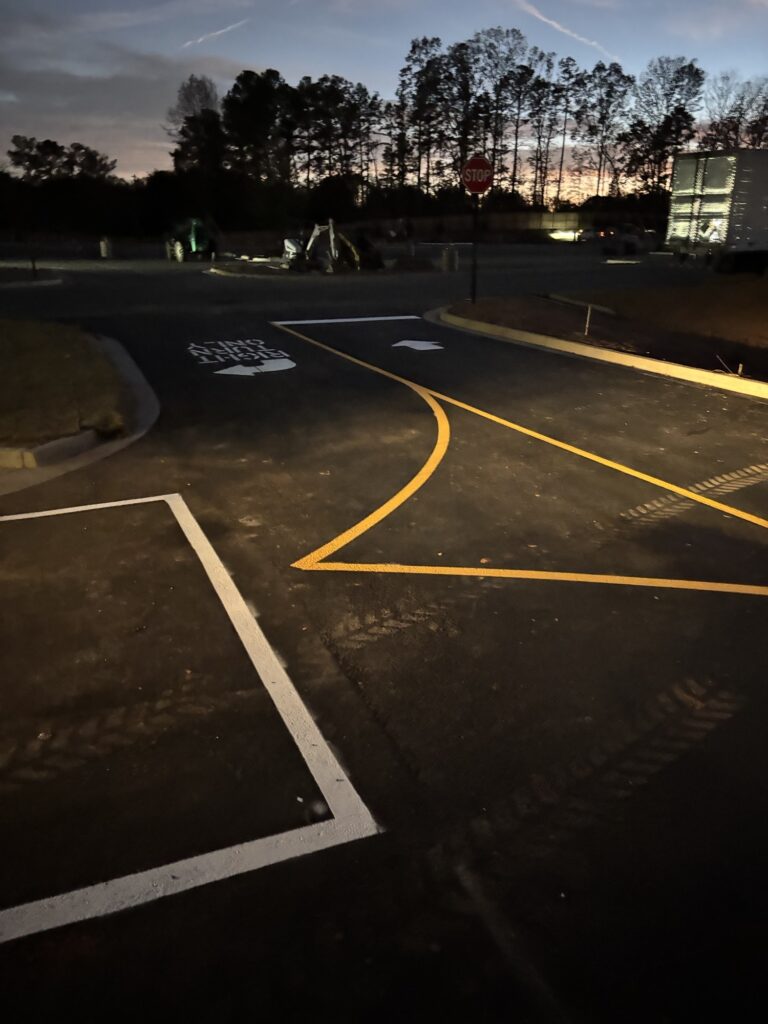
Cumming has several high-traffic commercial corridors, so clear directional guidance is essential. We applied 8 SHORT-TERM stencils, loading space markings, 2 DIGITAL PICK UP AHEAD stencils, 1 DO NOT ENTER stencil, and 1 RIGHT TURN ONLY stencil.

At the restaurant on site, we added 14 arrows and a STOP stencil so drivers could navigate the lot safely. Every crosshatched area received two coats of paint during the same mobilization, which helped shorten disruptions for tenants and visitors.

Up to four mobilizations were included to keep the project efficient.

Delivering Thermoplastic Work Built for Local Conditions

Thermoplastic striping performs well in the heat and humidity common in Cumming, so we used it for the deceleration lanes and rights of way along the property.

Our team laid out and installed five crosswalks, ten single arrows, one double arrow, 450 feet of skip lines, 3030 feet of five-inch white lines, eight white gore areas, one yellow gore area, and five stop bars.

These durable markings help guide drivers entering and leaving the site during peak periods.

Installing DOT Compliant Signs

Signage plays a major role in traffic control.

We installed nine DOT signs on type 7 posts in soil conditions typical of Forsyth County properties. We also relocated sixteen existing signs on their current posts to improve visibility and alignment with the updated markings.

Results that Support Safer Daily Traffic

Once all markings and signs were complete, the property had a clear, organized layout that made immediate sense to drivers. Our client shared strong feedback saying that Wildcat is always the most dependable contractor they have and that we are always on time and very professional.

“Wildcat is always the most dependable contractor we have.”

Ready for Upgrades in Cumming?

If your property in Cumming or the surrounding area needs new striping, thermoplastic markings, or DOT sign improvements, schedule a site visit with us. We can help you create a safer, easier-to-navigate layout that serves your customers and tenants every day.

How to Plan a Multi-Phase Commercial Asphalt Project Efficiently

Parking Lot Striping in Covington, GACommercial asphalt projects in Decatur, GA, often require careful coordination to balance business operations with construction schedules. Whether you’re resurfacing the parking lot at North Decatur Square or expanding a distribution center near DeKalb Industrial Way, a well-planned multi-phase approach helps keep traffic flowing, deadlines on track, and budgets under control.

Below, we’ll walk through how to plan your project efficiently and how to ensure your pavement lasts for years to come.

Key Takeaways

  • A thorough site evaluation in Decatur helps plan each asphalt phase to handle local weather and soil conditions.
  • A clear project schedule and coordination with city permits keep Decatur businesses operating smoothly during paving work.
  • Strong asphalt materials and good drainage design help pavement last through Decatur’s heat, rain, and traffic.
  • Regular upkeep and inspections from Wildcat Striping, Sealing & Paving keep Decatur commercial pavement durable and attractive.

Conduct a Site Evaluation with Local Conditions in Mind

Every successful project starts with a detailed site evaluation. In Decatur, where summer heat and humidity often test pavement durability, assessing drainage, base stability, and existing pavement thickness is key. We typically inspect areas like parking lots near Ponce de Leon Avenue for surface fatigue, oil stains, or rutting caused by heavy delivery traffic.

This initial step allows us to design each project phase with local climate and soil conditions in mind, ensuring long-term performance and safety.

Develop a Phased Construction Schedule Around Business Operations

Timing is everything when you’re managing a business near busy areas like East Trinity Place or the Decatur Square retail corridor. That’s why we structure project phases to minimize disruptions during operating hours. For example, we might schedule milling and paving in sections, allowing customer parking or delivery routes to stay open in adjacent areas.

Careful coordination between our paving crew, your management team, and city permit offices helps everything stay on schedule while maintaining customer access.

Coordinate with Local Utility Providers and City Permits

In Decatur, many commercial properties are connected to infrastructure managed by Georgia Power, the City of Decatur Public Works Department, and DeKalb County utilities.

Before work begins, we coordinate with these agencies to identify underground lines and avoid delays caused by unplanned interruptions. This proactive communication ensures compliance with local requirements while preventing rework or costly damage to existing systems.

Select Asphalt Materials Suited for Georgia’s Climate

Asphalt composition plays a major role in project longevity. Here in Decatur, the combination of heat, rain, and occasional freeze-thaw cycles calls for durable, flexible mixes designed for high traffic volumes.

We often recommend materials that meet Georgia Department of Transportation (GDOT) standards, such as polymer-modified asphalt for better resistance to rutting and oxidation. Using the right mix helps your pavement stand up to both summer heat on Commerce Drive and heavy vehicle use in industrial zones.

Plan Drainage and Water Management Strategies

Improper drainage is one of the top causes of pavement failure in metro Atlanta. For properties in low-lying areas, like near Peavine Creek or those close to Avondale Estates, we focus on designing proper slopes and catch basin placements.

Installing efficient water management systems during the planning stage prevents puddling, cracking, and base erosion—issues that often shorten pavement life.

Establish Traffic Control and Safety Measures

Maintaining safety and access during construction is essential, especially in high-traffic areas such as Clairemont Avenue or College Avenue. Our team develops clear signage, barricade layouts, and temporary lane configurations in partnership with local traffic enforcement.

These precautions not only protect your customers and staff but also ensure the project meets City of Decatur safety regulations.

How to Ensure Long-Term Performance After Project Completion

Implement a Routine Maintenance Schedule

Once your new asphalt surface is in place, regular maintenance keeps it performing like new. In Decatur’s variable weather, we suggest scheduling sealcoating every three to five years and inspecting for cracks before each season change.

This proactive approach prevents small issues from turning into costly repairs, especially in areas with high vehicle turnover like the Decatur Crossing retail complex.

Apply Professional Sealcoating for Added Protection

Sealcoating isn’t just for looks. It protects your investment from Georgia’s sun, rain, and oil leaks. A high-quality, coal-tar-free sealer applied by professionals helps reduce oxidation and keeps the asphalt flexible.

This layer also enhances curb appeal, which matters for properties like shopping centers along Scott Boulevard or mixed-use developments near East College Avenue.

Manage Drainage Systems Year-Round

Even the best paving job can fail if water management is neglected.

After your project, it’s important to keep drains clear of debris and monitor for pooling after heavy rains. Decatur’s frequent thunderstorms can quickly overwhelm clogged drains, so regular cleaning and inspection—especially around parking lots and curbs—help prevent long-term water damage.

Address Minor Repairs Promptly

Small cracks or potholes may seem minor, but in Decatur’s humid climate, they can quickly expand. We recommend patching and crack sealing as soon as damage appears. Quick fixes save money and extend the lifespan of the pavement, particularly in high-traffic zones like around the DeKalb Farmers Market or near busy office complexes off Church Street.

Schedule Periodic Professional Inspections

A professional inspection every couple of years helps catch issues early.

Our team uses advanced infrared and thermal tools to identify subsurface problems that aren’t visible from above. This helps property managers stay ahead of costly repairs and maintain compliance with local safety and accessibility codes.

Keep Your Next Asphalt Project on Schedule and Built to Last

When it comes to commercial paving in Decatur, careful planning and ongoing maintenance make all the difference. At Wildcat Striping, Sealing & Paving, we understand the challenges of managing large-scale asphalt projects without disrupting your business. We combine local expertise, GDOT-approved materials, and precise scheduling to ensure smooth, durable results that meet your operational needs.

If you’re planning a new commercial asphalt project or need maintenance on an existing lot, let us help you streamline every phase—from planning to completion. Contact us today to schedule a consultation and get a detailed project plan tailored to your property’s unique needs.

Frequently Asked Questions

How long does a multi-phase commercial asphalt project usually take in Decatur?

Most multi-phase commercial asphalt projects in Decatur take between two and four weeks, depending on site size, weather conditions, and traffic flow management, ensuring businesses can operate smoothly throughout construction without major disruptions.

Can asphalt paving be done during colder months in Decatur?

Yes, paving can be completed in cooler months when temperatures stay above 50°F. We adjust material mixes, compaction timing, and curing processes to maintain durability and consistent results during Decatur’s mild winter conditions.

What factors influence the cost of a commercial asphalt project in Decatur?

Project cost depends on area size, asphalt thickness, base condition, and site accessibility. We provide detailed estimates after on-site evaluations to ensure accurate pricing and transparent recommendations tailored to your property’s needs.

How do you manage parking access for businesses during large paving projects?

We design phased plans that divide lots into sections, use clear signage, and work during off-hours when possible, keeping employee and customer access available throughout the paving or resurfacing process.

On Time, On Point: A Thermoplastic Striping Project in McDonough, GA

In McDonough, GA, where growing traffic demands meet evolving infrastructure, clarity on the road isn’t optional—it’s essential. That’s why one of our long-time clients called us in for a detailed thermoplastic striping project.

They needed clear, durable markings installed quickly and correctly—and they knew Wildcat Striping, Sealing & Paving was the team for the job.

A Familiar Site, A Detailed Plan

This wasn’t our first time working with this client, which meant communication was smooth from the start. They had a specific list of markings needed across their site: skip lines, solid striping, crosswalks, stop bars, directional arrows, and custom text. Everything had to meet GDOT specifications and be applied efficiently, with minimal disruption to the surrounding area.

We mobilized our crew for a single-visit operation—a streamlined deployment that’s ideal for projects like this, where tight timelines and traffic coordination are critical.

Thermoplastic That Holds the Line

The layout called for exact quantities: 50 feet of skip lines and 125 feet of solid 5-inch striping to establish primary vehicle paths. To reinforce safety zones, we installed 84 feet of 10-inch lines and another 84 feet of 12-inch striping. These heavier lines stand up to high-wear areas and draw more attention where needed most.

Pedestrian safety was addressed with 54 feet of clean, high-visibility crosswalk striping.

At key intersections, we added three stop bars—thick, horizontal lines that give drivers a clear visual cue to pause. To guide vehicle movement, six directional arrows were installed, and a bold 82-foot double yellow centerline was added to separate lanes.

Finally, we applied a large “VISITOR” stencil at the entrance area—a small touch, but one that helps with traffic flow and first impressions.

Built for McDonough’s Climate—and Timeline

Thermoplastic isn’t just paint. It’s a hot-applied material that bonds to the pavement, hardens quickly, and lasts significantly longer under McDonough’s weather conditions. That’s key in a city where summer heat and heavy rainfall can wear down standard markings fast.

Because we handled everything in one mobilization, the client saved time, reduced traffic interruptions, and had their site fully striped and operational within the day.

They told us what they always do: “Wildcat is always on time and professional.” It’s the kind of feedback that means a lot—and the kind of standard we aim to meet on every job.

Looking for Reliable Striping in McDonough?

Whether you manage a private property, oversee a city roadway, or coordinate with GDOT, our team is ready to deliver results that last. We serve McDonough and the greater Atlanta area with professional, efficient thermoplastic striping that meets every code—and every deadline.

Get in touch today to schedule your next project.

Let’s put the finishing lines in place.

Transforming Safety at Dallas, GA Intersections: A GDOT Striping & Signage Case Study

When the roads around Dallas, GA needed renewed clarity and safety, our team at Wildcat Striping, Sealing & Paving stepped in—on time, professional, and ready to deliver results the city could count on.

Starting With Familiar Ground

We have a longstanding relationship with our client in Dallas.

They trust us not only for the technical work but for the consistency we bring to every project. So, when the Georgia Department of Transportation (GDOT) plans for new thermoplastic striping and signage in three key intersections, we were their first call.

These weren’t minor touch‑ups. The intersections involved three separate “3‑way” junctions, each needing crisp, durable stop bars and clear signage to reinforce traffic safety.

Pinpointing the Challenges

The project had two main pieces:

1. Thermoplastic Striping

  • Layout and stripe 9 stop bars in all — that’s three intersections, three stop bars each.
  • Apply two coats of high-grade traffic paint per plan.
  • All within one mobilization (i.e., one site move-in and setup).

2. STOP Signage & Street Blades

  • Supply and install 9 R1‑1 STOP signs on nine Type‑7 posts set in dirt (since the local soil was the substrate).
  • Add three sets of street name blades (six total blades) per the customer’s plan.
  • Also within a single mobilization.

The trick: the work had to match strict GDOT specifications and plan snips submitted on September 26, 2025. We needed to keep to tolerances, alignments, reflectivity, and durability standards.

And since these intersections serve residents, minimizing traffic disruption was critical.

How We Tackled It

Careful Planning & Mobilization

Because both striping and signage had to fit into one mobilization apiece, we organized our crew logistics, equipment, and materials ahead of time.

We did pre‑checks: verifying plan coordinates, ensuring paint and thermoplastic materials met GDOT spec, and confirming sign post locations based on soil conditions.

Precision Layout

We surveyed and staked the stop bar locations, double-checking against plan snips.

With those fixed, we placed our thermoplastic striping equipment. We applied the first coat with exact alignment, allowed proper cure time, then laid the second coat, ensuring strong adhesion and long-term wear resistance.

Signage Installation

Concurrent to striping (within the same mobilization window), our team installed the nine STOP signs on Type‑7 posts driven into the ground in dirt, ensuring stable footing and correct heights. We also added the sets of street name blades, positioning them as per the plan.

All reflective surfaces and panel alignments passed inspection.

Quality Control & Cleanup

After installation, we did detailed inspections: straightness, visual alignment, retroreflectivity, and edge crispness. We made minor adjustments on the fly. We cleaned up the site, removed debris, and reopened the intersections in a timely manner.

The Result & Feedback

The intersections in Dallas, GA, now feature bold, lasting thermoplastic stop bars and clearly posted signage. The work meets (and in spots slightly exceeds) GDOT durability and finish standards. Perhaps most importantly, the client was pleased:

“Wildcat is always on time and does quality work.”

That speaks volumes: consistent performance, punctual mobilization, and craftsmanship the client trusts.

Is Your Community Intersection Ready?

If your town, county, or district needs reliable striping, signage, or road safety work—done on schedule and built to specification—we’d love to help. For property owners, community planners, or municipal leaders around Dallas, GA, call us today to schedule a site assessment.

Let’s bring clarity, safety, and professionalism back to your roads.

Request an Estimate