

Severe weather in Decatur does not just disrupt operations for a day or two. It quietly accelerates damage across commercial parking lots, especially along high-traffic corridors like Memorial Drive, Covington Highway, and near I-285 access points.
Heavy rain, heat swings, and sudden cold snaps break down asphalt faster than many property managers expect. This guide explains exactly when sealcoating becomes urgent after severe weather and how to prepare your site so the work restores protection, not just appearance.
Below, we walk through the warning signs and the preparation steps that help you avoid deeper pavement failures, failed inspections, and liability exposure.
Key Takeaways
- Severe weather accelerates asphalt failure through moisture intrusion, oxidation, and chemical spread.
- Standing water, fading, and expanding cracks signal the need for urgent sealcoating.
- Proper preparation includes evaluation, repairs, access planning, and weather coordination.
- Sealcoating after storms protects pavement, supports compliance, and reduces long-term costs.
Standing Water After Heavy Rain
After major rain events, pooling water is often the first red flag.
In Decatur, sudden downpours overwhelm drainage around older commercial lots, especially near flat parcels common in light industrial areas. When water sits for hours instead of draining, it penetrates unprotected asphalt and accelerates oxidation from the inside out.
Sealcoating becomes urgent at this stage because it restores a waterproof barrier before subbase damage turns into widespread cracking or potholes.
Surface Fading and Asphalt Drying
Extreme summer heat followed by storms causes rapid surface oxidation. You will notice the asphalt turning gray, chalky, or brittle, particularly in open lots without shade near major roadways like Scott Boulevard.
This fading is not cosmetic.
It signals that oils binding the asphalt are breaking down.
Sealcoating after this type of weather cycle replenishes surface protection and slows further deterioration that leads to raveling and aggregate loss.
Expansion of Existing Cracks
Small cracks that seemed stable before a storm often widen afterward.
Temperature swings and moisture intrusion force cracks to expand, especially in high-load areas like delivery lanes or dumpster pads. In Decatur’s climate, freeze-thaw cycles are limited but still impactful during winter cold snaps.
Sealcoating becomes necessary once crack sealing is completed, locking out moisture and preventing those cracks from spreading under traffic.
Oil and Chemical Contamination Spread
Severe weather spreads contaminants.
Rainwater carries oil, fuel, and hydraulic fluids across the lot, pushing them deeper into the asphalt surface. This is common near service bays, loading docks, and gas-adjacent retail sites. Once these chemicals soften the asphalt binder, deterioration accelerates.
Sealcoating after storms encapsulates the surface and reduces further chemical penetration, protecting structural integrity.
Loss of Traction and Safety Risks
After storms, some lots develop slick or uneven surfaces, especially where aggregate has loosened. For commercial properties, this creates immediate liability exposure. ADA-accessible routes, fire lanes, and pedestrian crossings must remain safe and compliant.
When weather damage compromises the traction or visibility of pavement markings, sealcoating combined with restriping becomes an operational priority rather than a deferred maintenance task.
How to Prepare for Professional Sealcoating Services
Before any sealcoat goes down, a clear plan matters just as much as the product itself.
Severe weather exposes weak spots fast, and the steps below help ensure the work actually protects your pavement, stays compliant, and minimizes disruption to daily operations.
Schedule a Post-Storm Pavement Evaluation
The first step is a professional evaluation once conditions are dry. We assess surface oxidation, crack patterns, drainage behavior, and load stress areas common to your property type, whether that is a shopping center near downtown Decatur or a warehouse off Columbia Drive.
This evaluation determines whether sealcoating alone is appropriate or if crack sealing and minor repairs are required first.
Address Crack Sealing and Spot Repairs
Sealcoating is not a fix for structural failures. Cracks, potholes, and edge breakdown must be repaired in advance. After severe weather, these issues often appear rapidly, especially along curb lines and utility cuts.
Completing asphalt repairs first ensures the sealcoat bonds correctly and delivers its full service life rather than failing prematurely.
Coordinate Access, Traffic, and Tenants
Commercial sealcoating requires planning. Tenants, deliveries, and customer access all need coordination. In Decatur, many properties operate under tight parking constraints, especially near transit corridors and mixed-use developments.
We help stage the work in phases, maintain fire lane access, and schedule during off-hours or weekends to minimize business disruption.
Confirm Weather Windows and Cure Times
Sealcoating is weather-sensitive.
After storms, humidity levels and overnight temperatures matter as much as rainfall. In Metro Atlanta, sudden weather shifts are common, so confirming a stable window is critical. Cure times typically range from 24 to 48 hours, depending on the product and conditions.
Planning around these windows prevents tracking, scuffing, and uneven finishes that compromise performance.
Plan Striping and Compliance Updates
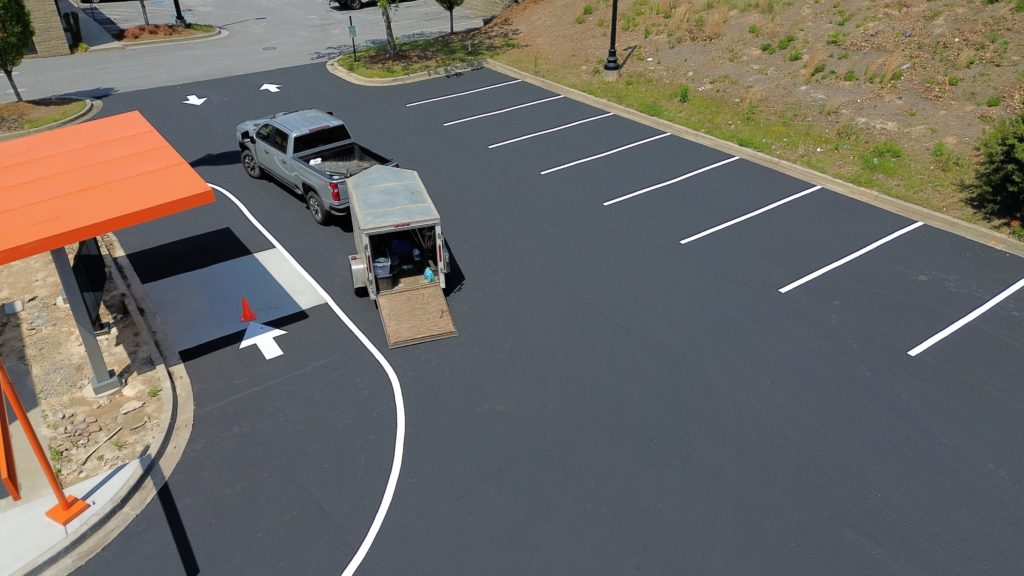
Sealcoating often removes existing striping. This creates an opportunity to correct layout issues, refresh ADA markings, and update fire lanes to meet local code and inspection requirements.
Many commercial properties in DeKalb County fail inspections due to faded markings rather than structural pavement issues. Scheduling restriping immediately after sealcoating restores visibility and compliance in one coordinated process.
Schedule Emergency Sealcoating Support in Decatur
Severe weather does not wait for your maintenance calendar. When storms expose weaknesses in your parking lot, delaying action increases repair costs, inspection risks, and liability. At Wildcat Striping, Sealing & Paving, we help Decatur businesses stabilize their pavement quickly with clear assessments, phased scheduling, and weather-aware execution.
Call us to schedule a post-storm evaluation and secure a sealcoating plan that protects your lot before minor damage becomes a capital expense.
Frequently Asked Questions
How soon after a major storm should sealcoating be scheduled?
Once the surface is fully dry, evaluations can typically occur within a few days. Timing depends on humidity, temperatures, and storm severity, but acting quickly prevents moisture from settling deeper into the asphalt structure.
Does sealcoating fix drainage problems caused by storms?
Sealcoating improves surface protection but does not correct grading or structural drainage issues. During evaluations, drainage deficiencies are identified so corrective measures can be planned alongside protective treatments.
Will my business need to close during sealcoating?
Full closure is rarely required. Most commercial projects in Decatur are phased to maintain access for tenants, deliveries, and emergency routes while allowing proper cure times.
Are there regulations that affect post-storm pavement work?
Local fire lane visibility, ADA access routes, and parking layout requirements must remain compliant. Coordinating sealcoating with restriping helps meet DeKalb County inspection expectations after weather-related wear.
