When a longtime customer reached out to us in Atlanta, GA, they faced a common but recurring issue: faded road markings and worn signage, diminishing both safety and visual clarity.
They needed a fresh, precise striping upgrade throughout their rights‑of‑way (ROW) and parking deck areas.
At Wildcat Striping, Sealing & Paving, we stepped in to deliver exactly that.
A Cityscape in Need of Renewal
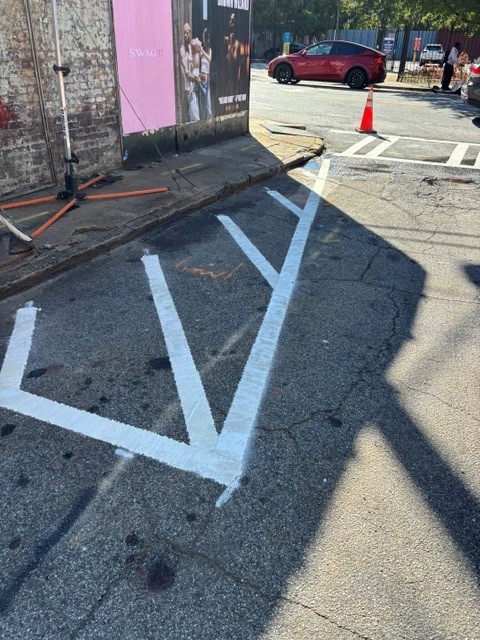
Mills Street and Parker Street formed the backbone of the ROW work we tackled. In those corridors, traffic control markings had grown tired and indistinct. On Mills Street, we refreshed 16 parallel parking spaces, resurfaced a crosswalk (40 linear feet), and painted roughly 400 LF of gore striping.
Over at Parker Street, we added a 22‑foot crosswalk and standard stop bar.
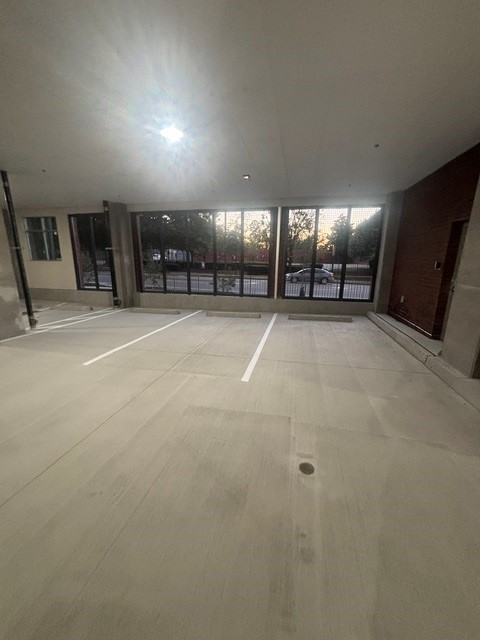
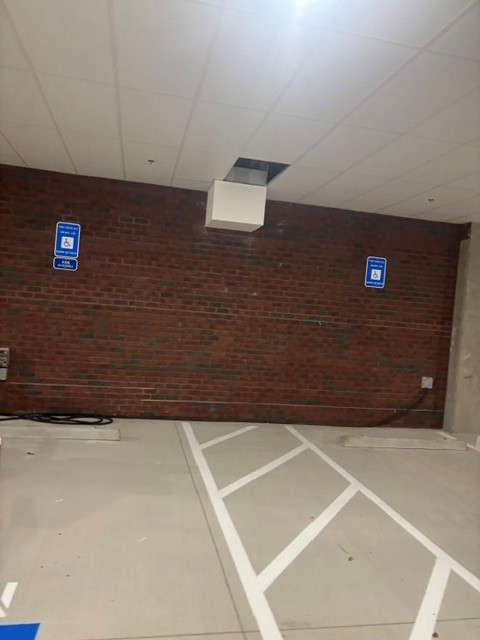
Simultaneously, the adjoining parking deck and alleyway called for a full repainting: 20 parking spaces, 2 handicap logos, a VAN stencil, access aisle striping, crosshatching around columns, and loading zone delineation.
We also installed stencils for “STOP,” “DO NOT ENTER,” and multiple “COMPACT” zones, re‑striped stop bars and crosswalks, and added 18 LF of double yellow to guide traffic flow.
Because the project spanned ROW lanes and deck surfaces, coordination was key.
We planned a single mobilization to cover both work zones, minimizing disruption to vehicle and pedestrian traffic.
Challenges on the Ground
1. Mixed Surfaces, Mixed Needs
The ROW surfaces and deck floor require different paint tolerances, application techniques, and timing. In one mobilization, we needed to switch smoothly between high‑durability thermoplastic in the ROW and two‑coat standard traffic paint in the parking deck.
2. Traffic Disruption
Mills Street and Parker Street see daily traffic. We had to phase work efficiently, managing closures, reroutes, and safety for pedestrians while delivering crisp, high‑visibility markings.
3. Precise Layout and Code Compliance
Every marking—spaces, crosswalks, stop bars—had to align with municipal standards for dimensions and spacing. In the deck, stencils and loading zones needed exact placement to meet ADA and safety codes.
How We Delivered the Upgrade
- Strategic sequencing. We began with the ROW segments, using thermoplastic materials for durability under weather and vehicle stress. Then we transitioned into the parking deck, applying two full coats of traffic paint and stencils.
- Efficient mobilization. One setup covered both zones, reducing setup/tear‑down time and customer disruption.
- Rigorous layout. We surveyed and marked locations per spec, double‑checking dimensions before painting.
- High-quality materials. We used industry‑standard thermoplastic for external work and premium traffic paint suited for deck surfaces.
- Clear communication. Because this was an existing client, we coordinated timing to occur during lower traffic windows and kept communication lines open for any unexpected changes.
Before ↔ After: What Changed
- Faded lines and blurred symbols turned into crisp, high‑contrast markings.
- Crosswalks, stop bars, and gore stripes in the ROW regained clarity and compliance.
- In the deck, layout was overhauled: every space, ADA logo, loading zone, and directional stencil now reads clean and professional.
- Traffic flow is better guided—both in the streets and the parking areas.
One of our clients’ direct comments:
“Wildcat has always met our needs and provide quality work.”
That trust spans years—and projects like this reinforce it.
Why This Matters to You, Atlanta Property Owner
If you manage streetscapes, commercial lots, parking decks, or alleys in Atlanta or nearby, and your markings are fading or confusing, consider doing what our client did: reach out early so we can evaluate and schedule your project with minimal downtime.
Ready for a clearer, safer site?
Contact us to schedule your site visit and get recommendations tailored to your property.