When the roads around Dallas, GA needed renewed clarity and safety, our team at Wildcat Striping, Sealing & Paving stepped in—on time, professional, and ready to deliver results the city could count on.
Starting With Familiar Ground
We have a longstanding relationship with our client in Dallas.
They trust us not only for the technical work but for the consistency we bring to every project. So, when the Georgia Department of Transportation (GDOT) plans for new thermoplastic striping and signage in three key intersections, we were their first call.
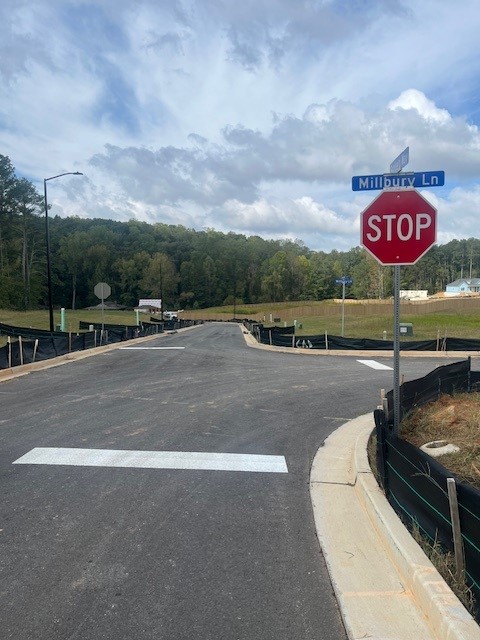
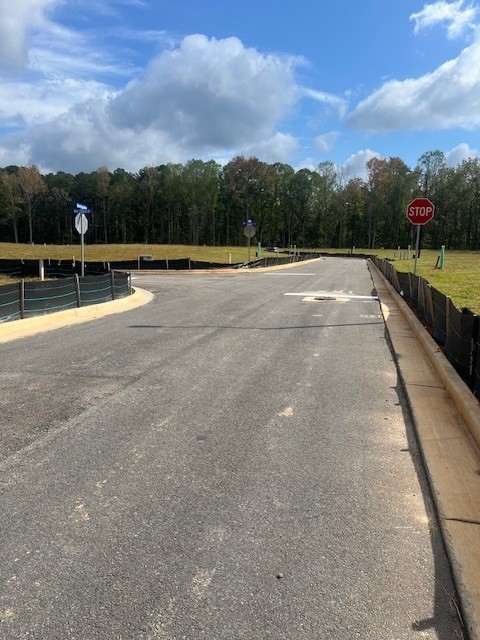
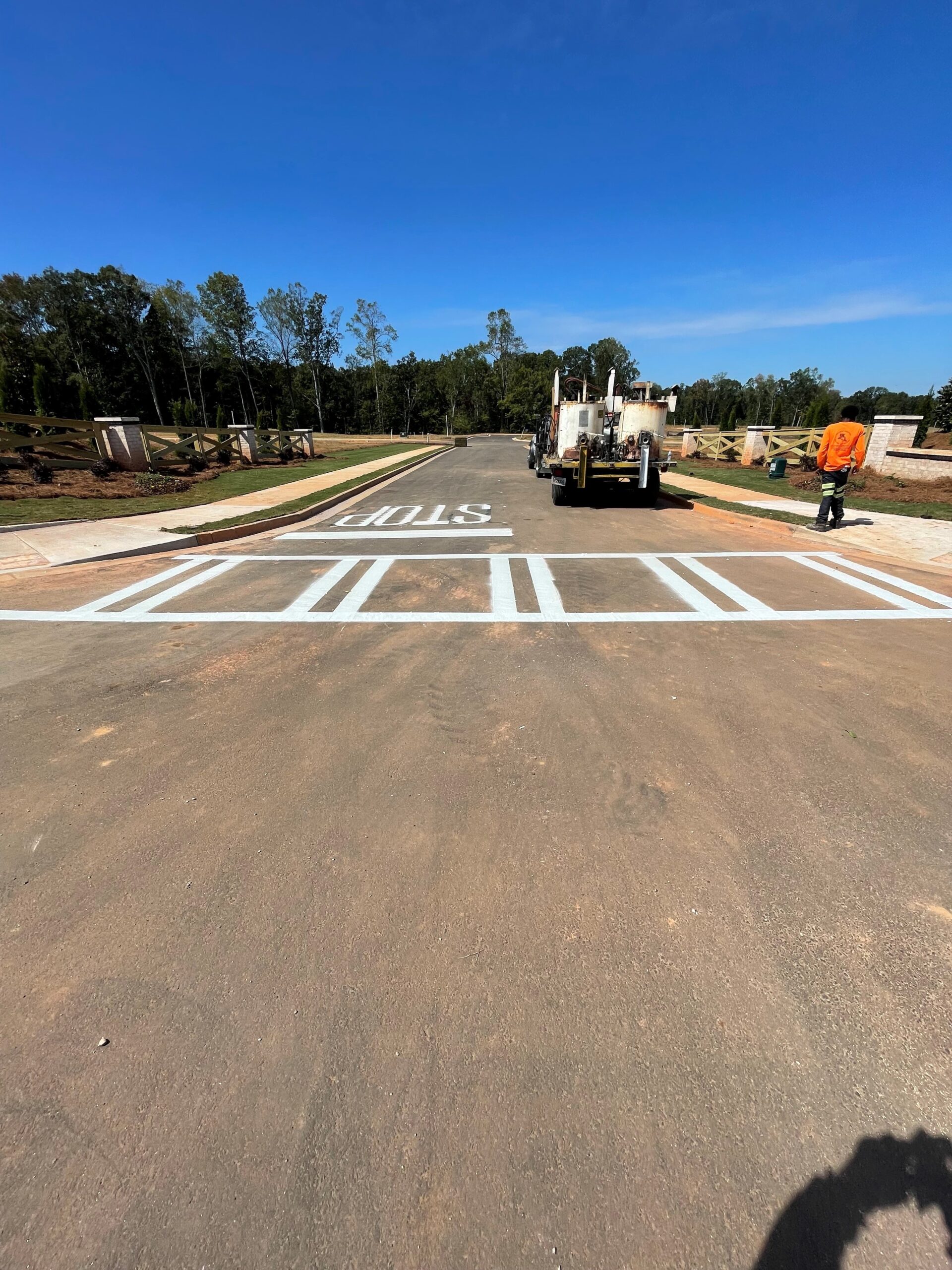
These weren’t minor touch‑ups. The intersections involved three separate “3‑way” junctions, each needing crisp, durable stop bars and clear signage to reinforce traffic safety.
Pinpointing the Challenges
The project had two main pieces:
1. Thermoplastic Striping
Layout and stripe 9 stop bars in all — that’s three intersections, three stop bars each.
Apply two coats of high-grade traffic paint per plan.
All within one mobilization (i.e., one site move-in and setup).
2. STOP Signage & Street Blades
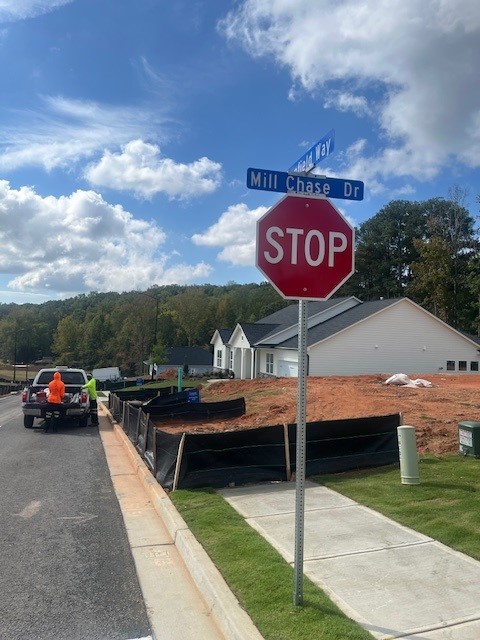
Supply and install 9 R1‑1 STOP signs on nine Type‑7 posts set in dirt (since the local soil was the substrate).
Add three sets of street name blades (six total blades) per the customer’s plan.
Also within a single mobilization.
The trick: the work had to match strict GDOT specifications and plan snips submitted on September 26, 2025. We needed to keep to tolerances, alignments, reflectivity, and durability standards.
And since these intersections serve residents, minimizing traffic disruption was critical.
How We Tackled It
Careful Planning & Mobilization
Because both striping and signage had to fit into one mobilization apiece, we organized our crew logistics, equipment, and materials ahead of time.
We did pre‑checks: verifying plan coordinates, ensuring paint and thermoplastic materials met GDOT spec, and confirming sign post locations based on soil conditions.
Precision Layout
We surveyed and staked the stop bar locations, double-checking against plan snips.
With those fixed, we placed our thermoplastic striping equipment. We applied the first coat with exact alignment, allowed proper cure time, then laid the second coat, ensuring strong adhesion and long-term wear resistance.
Signage Installation
Concurrent to striping (within the same mobilization window), our team installed the nine STOP signs on Type‑7 posts driven into the ground in dirt, ensuring stable footing and correct heights. We also added the sets of street name blades, positioning them as per the plan.
All reflective surfaces and panel alignments passed inspection.
Quality Control & Cleanup
After installation, we did detailed inspections: straightness, visual alignment, retroreflectivity, and edge crispness. We made minor adjustments on the fly. We cleaned up the site, removed debris, and reopened the intersections in a timely manner.
The Result & Feedback
The intersections in Dallas, GA, now feature bold, lasting thermoplastic stop bars and clearly posted signage. The work meets (and in spots slightly exceeds) GDOT durability and finish standards. Perhaps most importantly, the client was pleased:
“Wildcat is always on time and does quality work.”
That speaks volumes: consistent performance, punctual mobilization, and craftsmanship the client trusts.
Is Your Community Intersection Ready?
If your town, county, or district needs reliable striping, signage, or road safety work—done on schedule and built to specification—we’d love to help. For property owners, community planners, or municipal leaders around Dallas, GA, call us today to schedule a site assessment.
Let’s bring clarity, safety, and professionalism back to your roads.
When the team at the Locust Grove municipal office reached out to us, they already had high expectations. After years of trusting Wildcat Striping, Sealing & Paving with pavement maintenance, they needed a fresh, permanent roadway marking solution—and they knew we were the ones to deliver.
A Trusted Client, a Clear Request
Because this was a long‑standing relationship, we weren’t coming in cold.
Our history of dependable work gave us a head start: we already understood their standards, schedules, and priorities. So when they asked us to apply thermoplastic striping in critical traffic zones, we hit the ground running.
But the job was more than “paint the lines.” They wanted precision, durability, and a finish that would hold up under heavy wear. Their specifications included:
Two (2) stop bars
150 feet of skip (dashed) line
Four (4) directional arrows
1,362 linear feet of 5‑inch continuous striping
One mobilization only (i.e., one setup, no back‑and‑forth)
These were nonnegotiables. The client told us plainly: “We want it exactly right.”
The Challenges We Took On
Meeting High Expectations
In many jobs, clients leave room for “close enough.” Not here. The client wanted accuracy in spacing, alignment, and clarity. Slight misplacement or fading would not be acceptable.
Durability Under Stress
Locust Grove roads see traffic from local commuters, service vehicles, and occasional heavy trucks. Typical painted lines would wear quickly. We needed a more permanent solution.
One Mobilization Only
Because traffic interruptions are disruptive, especially in municipal zones, we had to plan to do it all in one continuous effort. Mistakes or delays would force rework or prolonged closures.
Thermoplastic Striping Done Right
Pre‑Job Planning
We conducted a site survey to validate measurements and traffic patterns. We coordinated timing with the city to ensure that our work window would minimize disruption during peak hours.
Material & Application
Thermoplastic is ideal for high-traffic roadways. It combines glass beads, pigments, and resins to create lines that resist abrasion, UV damage, and oil spills.
Using specialized striping machinery, we laid:
Two stop bars at precisely measured distances
150′ of skip line, with consistent dash lengths and spacing
Four arrows, crisp in shape and high in reflectivity
1,362′ of 5″ continuous striping that aligns perfectly with the roadway
We monitored temperature, ambient conditions, and curing time to ensure optimal bonding.
Quality Assurance
Once we completed the striping, we walked every section, verifying measurements, alignment, and reflectivity under different lighting. Any deviations were corrected immediately—no “we’ll fix that later.”
A Result That Hit the Mark
When the job was done, the Locust Grove team’s feedback was simple and direct: “Exactly what we wanted.”
They saw:
Clean, highly visible lines and markings
Consistent spacing and alignment
Durable, long-lasting striping that stood up to early traffic
Zero need for callbacks or rework
Because we mobilized only once, we minimized road closure time and inconvenience to the public.
Thinking of Thermoplastic Striping for Your Roads?
If your city, HOA, or public works team in Locust Grove or nearby needs crisp, long-lasting pavement striping done right the first time, reach out. We’ll survey your site, recommend designs, and execute with precision—just like we did for this project.
Let us make your roadways safer, cleaner, and more professional—one precise stripe at a time.
When a longtime customer reached out to us in Atlanta, GA, they faced a common but recurring issue: faded road markings and worn signage, diminishing both safety and visual clarity.
They needed a fresh, precise striping upgrade throughout their rights‑of‑way (ROW) and parking deck areas.
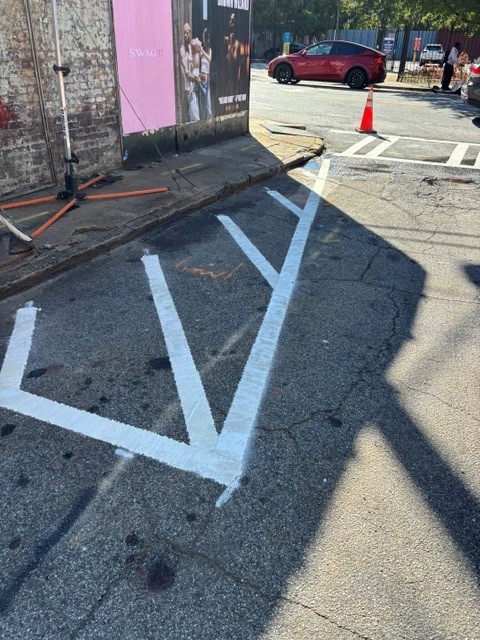
Mills Street and Parker Street formed the backbone of the ROW work we tackled. In those corridors, traffic control markings had grown tired and indistinct. On Mills Street, we refreshed 16 parallel parking spaces, resurfaced a crosswalk (40 linear feet), and painted roughly 400 LF of gore striping.
Over at Parker Street, we added a 22‑foot crosswalk and standard stop bar.
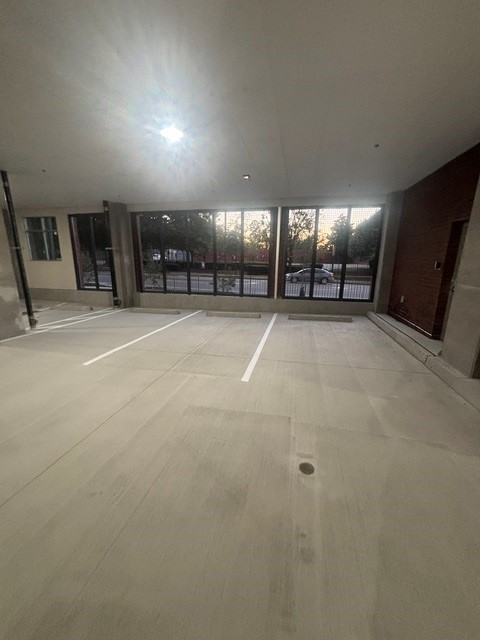
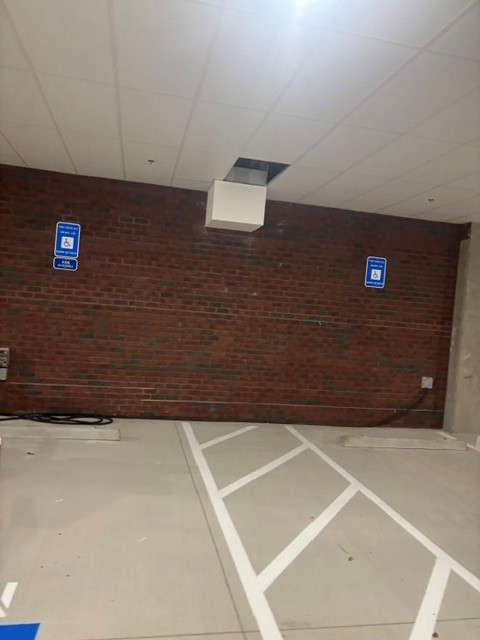
Simultaneously, the adjoining parking deck and alleyway called for a full repainting: 20 parking spaces, 2 handicap logos, a VAN stencil, access aisle striping, crosshatching around columns, and loading zone delineation.
We also installed stencils for “STOP,” “DO NOT ENTER,” and multiple “COMPACT” zones, re‑striped stop bars and crosswalks, and added 18 LF of double yellow to guide traffic flow.
Because the project spanned ROW lanes and deck surfaces, coordination was key.
We planned a single mobilization to cover both work zones, minimizing disruption to vehicle and pedestrian traffic.
Challenges on the Ground
1. Mixed Surfaces, Mixed Needs
The ROW surfaces and deck floor require different paint tolerances, application techniques, and timing. In one mobilization, we needed to switch smoothly between high‑durability thermoplastic in the ROW and two‑coat standard traffic paint in the parking deck.
2. Traffic Disruption
Mills Street and Parker Street see daily traffic. We had to phase work efficiently, managing closures, reroutes, and safety for pedestrians while delivering crisp, high‑visibility markings.
3. Precise Layout and Code Compliance
Every marking—spaces, crosswalks, stop bars—had to align with municipal standards for dimensions and spacing. In the deck, stencils and loading zones needed exact placement to meet ADA and safety codes.
How We Delivered the Upgrade
Strategic sequencing. We began with the ROW segments, using thermoplastic materials for durability under weather and vehicle stress. Then we transitioned into the parking deck, applying two full coats of traffic paint and stencils.
Efficient mobilization. One setup covered both zones, reducing setup/tear‑down time and customer disruption.
Rigorous layout. We surveyed and marked locations per spec, double‑checking dimensions before painting.
High-quality materials. We used industry‑standard thermoplastic for external work and premium traffic paint suited for deck surfaces.
Clear communication. Because this was an existing client, we coordinated timing to occur during lower traffic windows and kept communication lines open for any unexpected changes.
Before ↔ After: What Changed
Faded lines and blurred symbols turned into crisp, high‑contrast markings.
Crosswalks, stop bars, and gore stripes in the ROW regained clarity and compliance.
In the deck, layout was overhauled: every space, ADA logo, loading zone, and directional stencil now reads clean and professional.
Traffic flow is better guided—both in the streets and the parking areas.
One of our clients’ direct comments:
“Wildcat has always met our needs and provide quality work.”
That trust spans years—and projects like this reinforce it.
Why This Matters to You, Atlanta Property Owner
If you manage streetscapes, commercial lots, parking decks, or alleys in Atlanta or nearby, and your markings are fading or confusing, consider doing what our client did: reach out early so we can evaluate and schedule your project with minimal downtime.
Ready for a clearer, safer site?
Contact us to schedule your site visit and get recommendations tailored to your property.
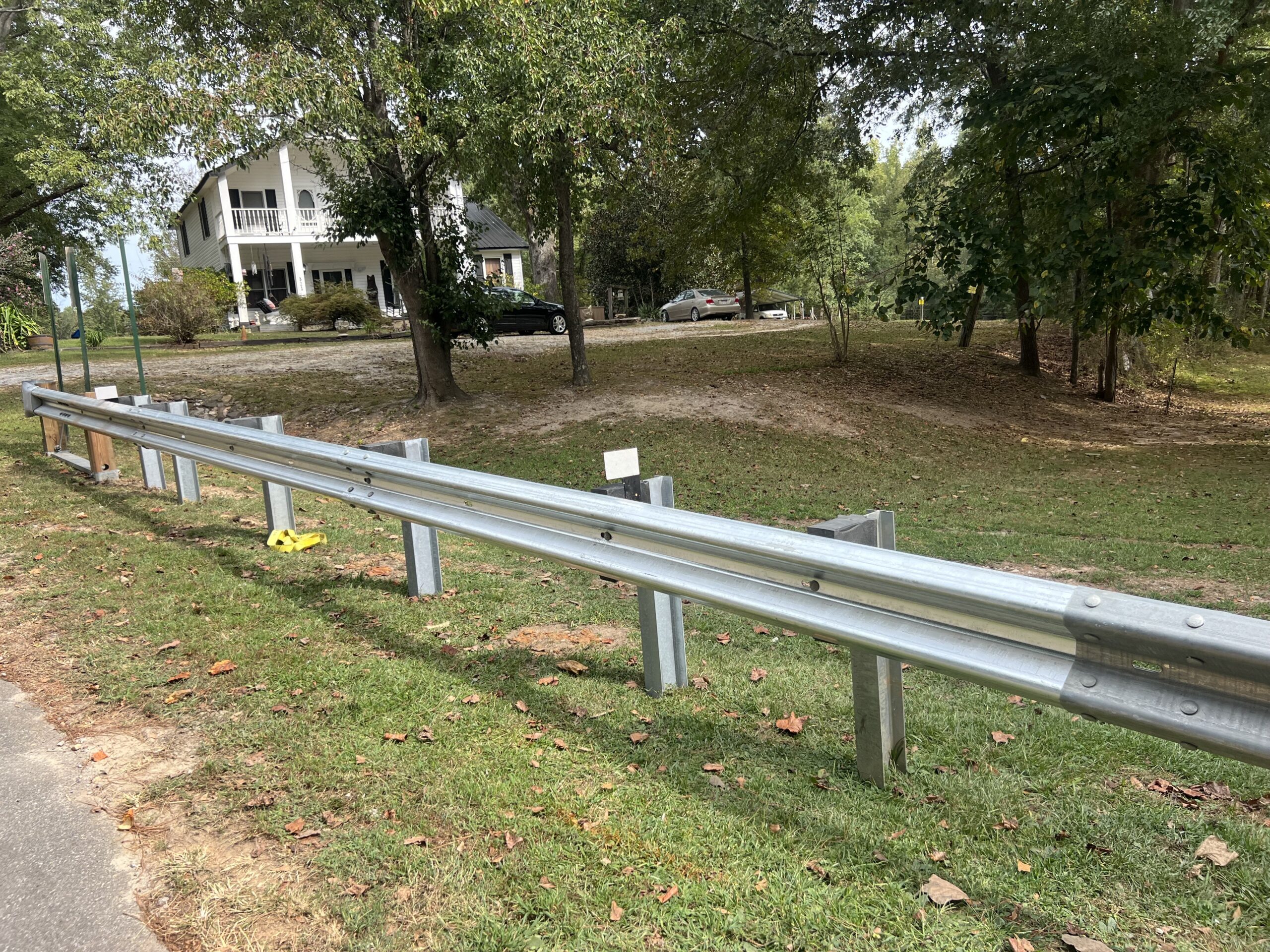
When our longtime client in Villa Rica reached out, they described the issue plainly: a section of guardrail had sustained heavy damage—bent, compromised, and no longer offering the protection it once did. Their words were simple and direct: “We need something safe, reliable—and fast.”
Because they had trusted Wildcat Striping, Sealing & Paving before, they called us again. They knew we would deliver quality, and this time the project was a guardrail repair in Villa Rica, GA.
When Safety Fails: What We Faced
The damaged rail wasn’t just cosmetic. In its current state, it posed a liability:
Sections of the old w‑beam had buckled, reducing crash resistance.
The terminal end had lost integrity, so it couldn’t properly absorb or deflect impact.
Adjacent undamaged rail had to serve as tie‑ins, but the mismatch made transitions weak.
The client needed cleanup too—removal and hauling off of the damaged sections.
They wanted a solution that looked seamless, eliminated the weak point, and delivered real protection.
A Clear, Reliable Repair Plan
Here’s how we reconstructed that failing rail into a robust safety barrier:
1. Remove & Clear
We cut out about 50 linear feet of the damaged guardrail, disconnected the posts, and hauled all materials offsite. This cleared the path for a new installation.
2. Precision Alignment & Tie‑Ins
We left the adjoining sections intact and prepared them for integration. Our team measured carefully to ensure a flush, strong connection with existing rail runs.
3. Install New W‑Beam & Termination
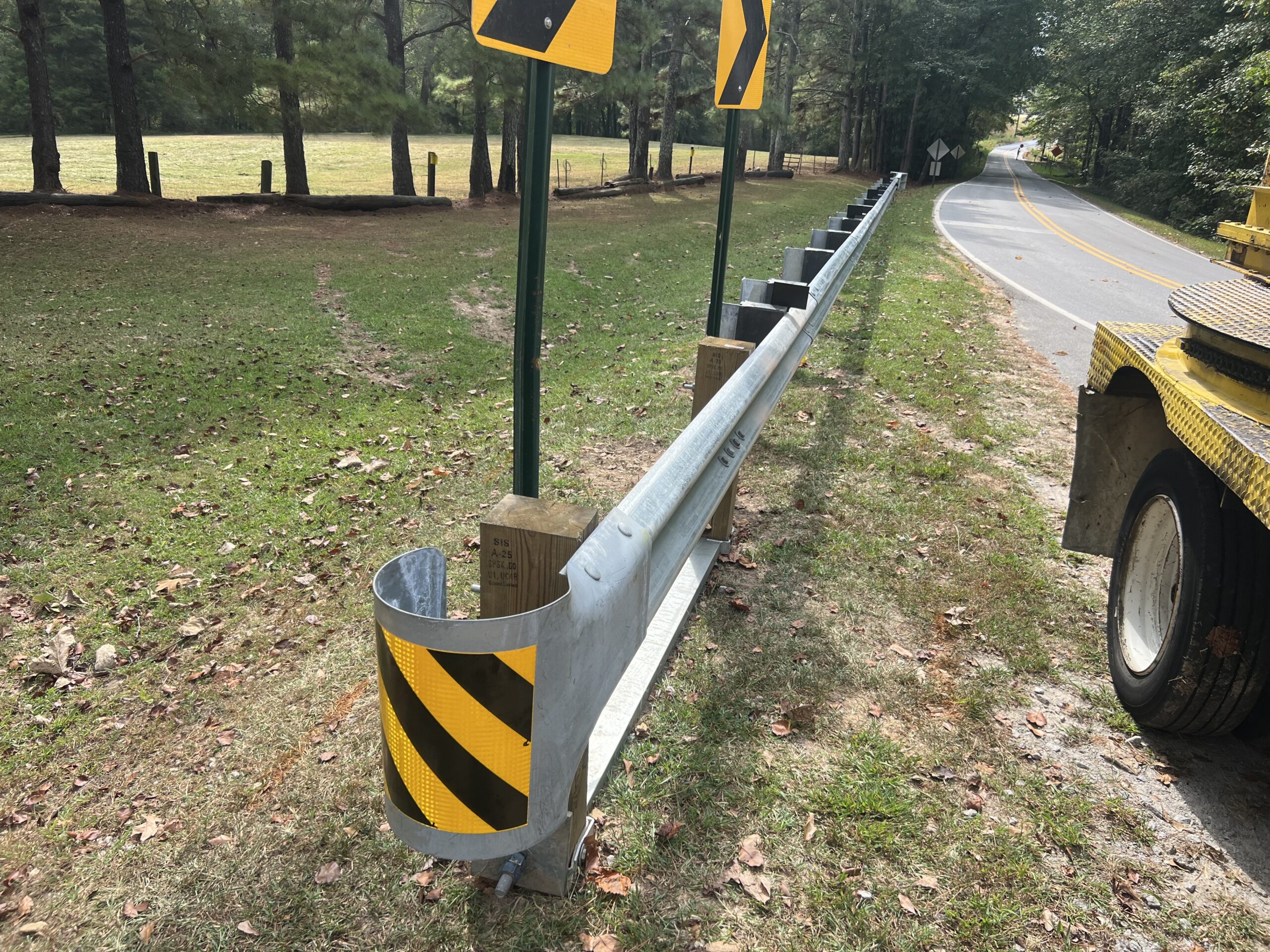
We installed 37.5 LF of new 12‑gauge w‑beam guardrail, connecting it cleanly to the old run. At the end, we installed a Type 1 trailing anchor to properly terminate the run and absorb shock in case of impact.
4. Quality Checks & Reinforcement
After installation, we surveyed posts for plumbness, checked rail spacing, and verified the end anchor. We ensured the transition between the old and new met industry safety spacing tolerances.
When we handed it off, it looked like an original piece of the run—not a remediation patch.
Confidence, Safety, Satisfaction
The result impressed our client. Their feedback was straightforward but powerful: “This is exactly what we needed.”
A seamless transition between old and new sections means drivers won’t experience a sudden weak point.
The new trailing anchor ensures the rail can better manage impact energy.
The repairs restored structural integrity while preserving as much of the original system as possible.
Cleanup and removal gave them a neat site, too—not just a functioning rail.
That trust—they called us again because they know we solve problems.
What This Means for You in Villa Rica
Guardrails may not be glamorous, but when they fail, the stakes are high. If you’re in Villa Rica or nearby and find a guardrail bent, sagging, or partly compromised, don’t let it linger. You deserve a fix that restores safety—not a patch that fools no one.
Ready to see how we can restore your guardrail—or inspect it for hidden faults? Reach out to us today, and let’s protect your property and your peace of mind.
Keeping your parking lot clean is essential in a place like Decatur, GA, where first impressions matter—especially near popular spots like East Lake Drive, College Avenue, and the busy commercial corridors around Decatur Square.
But for many business owners, the challenge isn’t just finding a sweeping service—it’s finding one that won’t disrupt foot traffic or deliveries during operating hours.
Whether you run a boutique on West Ponce de Leon or a medical office near Emory Decatur Hospital, here’s how to make sure your sweeping schedule works with your business, not against it.
Key Takeaways
Peak traffic hours in Decatur should guide when sweeping is scheduled to avoid business disruption.
After-hours sweeping and noise ordinance awareness help maintain compliance and peace in mixed-use areas.
Lot usage, location, and service frequency should be clearly discussed and documented before work begins.
Flexible options like early cleaning, split shifts, or shared scheduling keep your lot clean without interruptions.
Start by Identifying Peak Traffic Times for Your Business
Before reaching out to a sweeping service, take a close look at when your parking lot gets the most use. In Decatur, restaurants on Clairemont Avenue might see evening rushes, while offices near Agnes Scott College have busy weekday mornings.
Understanding your traffic flow helps us schedule work during true off-hours—like early mornings or late nights—so we’re not sweeping during lunch rush or while patients are being dropped off.
Choose a Sweeping Company That Offers After-Hours or Overnight Service
Not all sweeping companies are built for flexible scheduling, but at Wildcat Striping, Sealing & Paving, we’ve structured our routes to support after-hours work. We’re used to cleaning lots overnight around Scott Boulevard and DeKalb Medical Parkway.
This flexibility helps our clients avoid noise complaints and maintain curb appeal without interfering with business operations.
Ask upfront if overnight or early morning slots are available for your area.
Discuss Your Business Type and Lot Usage with the Contractor
Every business has unique needs. A retail store in the Oakhurst neighborhood won’t have the same lot usage as an auto shop near Memorial Drive.
When you book with us, we want to understand not just your hours, but how your lot functions throughout the week. That allows us to choose quieter sweepers for residential-adjacent areas or faster equipment for high-traffic commercial zones.
Check Local Noise Ordinances and City Regulations
Decatur enforces noise limits, especially in residential or mixed-use zones like those near Glenlake Park or Sycamore Street. When we book your sweeping service, we factor in local noise restrictions to avoid code violations or neighbor complaints.
We’re familiar with City of Decatur ordinances and coordinate with clients to ensure all sweeping occurs within permitted timeframes.
Confirm Frequency and Timing with a Written Service Agreement
Setting a recurring schedule—whether weekly, biweekly, or monthly—helps us consistently meet your timing preferences.
For example, clients near North Decatur Road prefer early Sunday mornings, when traffic is minimal. We document all timing agreements clearly, so there’s no guesswork or miscommunication.
You’ll always know when we’re coming and how long the job will take.
What to Do If You Can’t Find a Schedule That Fits Your Business Hours
When your operating hours limit availability for traditional sweeping schedules, there are still effective ways to maintain a clean, professional lot without disrupting business.
Ask About Split Sweeping Schedules to Minimize Disruption
If a full sweep during off-hours isn’t possible, we can divide service into two shorter sessions—maybe before you open and after you close.
We’ve used this approach for properties near Decatur Crossing, where multiple businesses share a lot and operate on staggered schedules.
This method keeps disruptions low without sacrificing cleanliness.
Consider Early Morning or Pre-Dawn Sweeping Options
Decatur mornings are quieter, especially before 6 AM, and most customers won’t even notice a sweeper has come through.
For clinics, gyms, and cafés that open early—like those along Church Street—we often recommend pre-dawn sweeping. It keeps your lot clean for the day ahead without causing conflicts with early arrivals.
Schedule Less Frequent, Deeper Cleans as a Compromise
If your hours make regular sweeping difficult, opt for monthly deep cleans instead of weekly passes. For example, a small law office near Winnona Park might not need weekly service but can benefit from a thorough monthly clean with pressure washing and debris removal.
We tailor the service intensity and duration based on your availability and parking lot size.
Coordinate with Nearby Businesses for Shared Scheduling
If you’re in a plaza or strip mall—like those near South Candler Street—you might be able to align your sweeping schedule with neighboring tenants.
This kind of coordination can give us access to the lot when most or all businesses are closed, making the job more efficient for everyone. We’re happy to help facilitate those discussions and craft a shared schedule.
Use Temporary Lot Closures or Sectioned-Off Sweeping
If you’re truly restricted on timing, we can sweep in stages.
By sectioning off part of your lot, we clean one area while customers still have access to the rest. This works well for locations with larger lots, such as grocery stores or event venues near Decatur Recreation Center.
With clear signage and a heads-up to your customers, it’s a smooth workaround that keeps things moving.
Keep Your Parking Lot Clean Without Interrupting Your Business
At Wildcat Striping, Sealing & Paving, we specialize in parking lot sweeping that works around your schedule, not against it. Whether you’re located near Decatur Square, Emory Commons, or tucked away in East Lake, we offer flexible sweeping services—including overnight and early morning options—designed to keep your lot spotless without interfering with your customers.
If standard schedules don’t work for your business, we’ll create a custom solution—whether that means split shifts, coordinating with your neighbors, or setting up sectioned cleanings.
Reach out today to schedule a free consultation or request a custom quote.
Frequently Asked Questions
How much notice is needed to schedule a sweeping service in Decatur?
We typically ask for at least 48 hours’ notice to ensure proper scheduling, equipment availability, and coordination with traffic patterns around your specific Decatur property or business location.
Do you provide seasonal sweeping for heavy leaf buildup in the fall?
Yes, we offer seasonal sweeping to manage leaf accumulation, especially in tree-heavy areas like the Great Lakes, Glenwood Estates, and near Decatur Cemetery, where storm drains often get clogged.
Can you handle one-time cleanups after local events or construction?
Absolutely. We provide one-time sweeping services after festivals, private events, or small construction jobs near places like Legacy Park, Oakhurst, or downtown Decatur.
What types of paved surfaces can be swept besides standard parking lots?
We sweep a range of paved areas, including concrete pads, private access roads, loading docks, and drive lanes in retail centers, apartment complexes, and commercial plazas across Decatur.
If you own or manage commercial property in Decatur, you know how important a well-maintained parking lot is to your business. From busy spots like the Decatur Square to high-traffic locations near DeKalb Medical Center or Agnes Scott College, your pavement isn’t just a surface—it’s the first impression your customers and clients experience.
At Wildcat Striping, Sealing & Paving, we’ve worked with property owners throughout Oakhurst, Winnona Park, and along Scott Boulevard to build durable, high-quality parking lots that last through Georgia’s hot summers and sudden rainstorms.
Here’s a clear look at our paving process from start to finish, so you know what to expect every step of the way.
Key Takeaways
A proper site check in Decatur looks at grading, drainage, and local codes before any paving begins.
Removal of the old surface is handled carefully to avoid damage in tight or busy areas around town.
A strong base and smooth asphalt are laid to handle Decatur’s clay soil and humid summer conditions.
Final touches include line striping, signs, and a walkthrough to make sure everything is safe and done right.
Step 1. Site Evaluation and Planning With Local Factors in Mind
Our process starts with an on-site evaluation, where we assess existing conditions like drainage patterns, sub-base stability, and traffic flow. In Decatur, where elevation shifts and tree-lined lots are common—especially around neighborhoods like Glenwood Estates or Medlock Park—we pay close attention to grading and runoff.
Our team also checks for compliance with DeKalb County regulations and ADA accessibility requirements, ensuring your project meets all local standards before we break ground.
Step 2. Demolition and Removal of the Existing Surface
If there’s an existing parking lot in place—cracked, faded, or crumbling—we’ll begin by milling or removing the old asphalt or concrete surface.
In older areas like Lenox Place or surrounding the East Lake MARTA station, we often run into mixed base materials that need proper removal and stabilization. Our crews use heavy-duty equipment to clear out the surface while keeping disruption to surrounding areas minimal, especially in tight spaces near residential or mixed-use properties.
Step 3. Grading and Sub-Base Preparation for Long-Term Durability
In Decatur, the red clay soil and occasional granite outcroppings (a nod to nearby Stone Mountain) mean we must fine-tune our grading process to ensure proper compaction and drainage.
We bring in aggregate base material when needed and use laser grading technology to create a surface that promotes even water flow, which is critical for preventing potholes and premature cracking.
Step 4. Laying the Asphalt With Precision and Care
Once the foundation is prepped, we lay the new asphalt in controlled layers, using hot mix asphalt sourced from trusted regional suppliers.
Timing is everything here.
Decatur’s humid summers can make temperature management tricky, so we schedule our paving windows during optimal conditions to ensure the material bonds correctly.
Whether it’s a small lot off Clairemont Avenue or a sprawling property near North Decatur Road, our crews pave each section with consistent thickness and compaction to achieve a smooth, durable finish.
Step 5. Striping and Signage Customized to Your Property
After the asphalt cures, we handle all striping, markings, and traffic signage according to Georgia DOT and ADA guidelines.
In busy commercial zones like Church Street or Ponce de Leon Avenue, we pay special attention to layout efficiency—maximizing space without compromising safety.
Whether you need standard parking stalls, fire lanes, or EV charging spaces clearly marked, we tailor the layout to your property’s needs and traffic flow.
Step 6. Final Inspection and Client Walk-Through
Before we close out the project, we will conduct a full inspection of the site with you. We double-check that all pavement, markings, drainage, and signage are completed to spec.
In high-traffic parts of Decatur—such as the Emory Commons area or near city schools like Renfroe Middle—we understand the importance of reopening quickly. So, we also go over recommended cure times and maintenance practices to help your investment last.
Let’s Build a Parking Lot That Lasts in Decatur
If your property needs a parking lot that can stand up to Decatur’s weather, foot traffic, and strict local standards, we’re here to help.
At Wildcat Striping, Sealing & Paving, we’ve been paving and protecting parking lots across Decatur for years—from the bustling corridors around Columbia Drive to smaller lots tucked between historic homes. We know what it takes to get the job done right the first time, and we tailor every step of the process to the needs of your property.
Don’t let a worn-out lot cost you business. Let us take the hassle out of repaving with expert planning, smooth execution, and results that reflect well on your brand.
Call us today to schedule your parking lot consultation and get a quote from a team that knows Decatur inside and out.
Frequently Asked Questions
How long does a new parking lot in Decatur typically last?
A properly installed asphalt lot in Decatur can last 15 to 20 years with regular sealing, re-striping, and surface repairs based on traffic, weather, and the property’s layout and drainage conditions.
Can you pave around business hours to avoid customer disruption?
Yes, we often schedule paving during off-hours—including evenings and weekends—for busy Decatur locations like retail centers, schools, or apartment complexes to reduce traffic interruptions and keep business running smoothly.
Do you handle parking lot sealing and ongoing maintenance, too?
We offer full maintenance services like sealing, crack repair, and restriping to extend pavement life and maintain curb appeal, especially in high-traffic areas like Decatur Square or around North Decatur Road.
Is permitting required for parking lot paving in Decatur?
Yes, commercial paving usually requires permits from the City of Decatur or DeKalb County. We handle the permit application, drawings, and code compliance to keep your project on schedule and stress-free.
If you’re looking to repave your driveway in Winnona Park or get your parking lot resealed near DeKalb Medical Center, finding a reliable asphalt company in Decatur, GA, should start with one simple step: scheduling a free estimate.
It might sound like a hassle, but most professional paving companies—ours included—make the process easy. Whether you’re dealing with potholes after a wet winter or planning a full resurfacing project around Oakhurst, getting one sets the stage for a smooth, efficient job.
Here’s how you can schedule a free estimate with an asphalt company in Decatur, plus what to do if you’re running into issues along the way.
Key Takeaways
A phone call or online form makes it easy to request a free estimate from a Decatur asphalt company.
Flexible scheduling helps busy Decatur residents find estimate times that fit around school pickups, meetings, and weekend plans.
Local companies understand Decatur neighborhoods and can help if you’re having trouble getting a response or appointment.
A trusted team like Wildcat Striping offers free estimates and honest proposals for homes and businesses across Decatur.
Reach Out With a Quick Call or Online Request
For many folks around downtown Decatur or near East Lake MARTA station, the simplest way to get started is just to give us a call.
A quick phone conversation gives us a chance to ask a few important questions—like where your property is located (for example, just off Ponce de Leon Avenue or closer to Avondale Estates), what type of surface you’re dealing with, and your general project goals.
If you prefer digital, our online form lets you upload photos, give details, and request a time that works for your schedule. Either way, it’s built for convenience, and you’re talking to a real local expert on the other end.
Choose a Time That Works Around Your Day
We know folks in Decatur are busy—whether you’re a small business owner near the Square or a homeowner picking kids up from Glenwood Elementary. That’s why we offer flexible scheduling for estimates, including early mornings and some weekend options.
Once you reach out, we’ll work with your calendar to find a time that doesn’t throw off your routine. If you’re trying to coordinate with HOA board members in Leafmore-Creek Park Hills or time a project before an event at Legacy Park, just let us know.
We’ll accommodate.
Let Us Know About Site Access and Any Concerns
When you schedule your estimate, it’s helpful to tell us about anything that could affect how we assess your space.
For instance, if your driveway is tucked away behind a historic bungalow near Clairemont Avenue or your commercial lot in Decatur Heights has limited access during school pickup hours, we can plan.
These details help us avoid surprises and ensure we give you the most accurate estimate possible, on-site and on time.
Confirm With a Follow-Up Text or Email
Once your estimate appointment is set, we’ll confirm it with a follow-up message.
If you live in places like Medlock Park or along Scott Boulevard, you might prefer a text, especially if you’re on the go. Or if you’re managing properties and prefer email receipts and documentation, we’ll send a confirmation your way.
Either method gives you peace of mind that the appointment is officially on the books.
Know What to Do if You’re Having Trouble Scheduling
Every now and then, things don’t go as planned. Maybe you’ve called around to a few companies and still haven’t locked down a time. Or maybe you’re not hearing back at all.
If that’s your situation, here’s what we suggest from a local provider’s point of view:
Double-Check Contact Info and Follow Up Promptly
If you’ve submitted an online form and haven’t heard back within 24 hours, it could be as simple as a mistyped email or phone number. We see this happen a lot, especially when folks are reaching out from mobile devices while juggling other tasks.
For neighborhoods like Great Lakes or Emory Highlands, where cell signals can dip in and out, a quick follow-up call is often the fastest way to clear things up.
Ask for Referrals From Other Decatur Locals
Decatur has a tight-knit community, and word-of-mouth still goes a long way here.
If you’re struggling to get in touch with a company, it can help to ask around—whether that’s chatting with neighbors in Lenox Place, posting on a local Facebook group, or checking in with your HOA.
Often, someone nearby has already worked with a company and can point you in the right direction. And if they’ve had a good experience, that’s a sign the company is responsive.
Look for Companies With Local Roots
Sometimes, scheduling issues stem from working with out-of-town contractors who don’t know Decatur. They might be overextended or unfamiliar with local zoning and road access.
Stick with a company based in or near Decatur—like us at Wildcat Striping, Sealing & Paving—because we know the city’s layout, traffic flow, and quirks.
That makes scheduling faster and service more reliable. We’ve been on every kind of surface from Church Street to Columbia Drive and everything in between.
Avoid Peak Traffic and Busy Seasons
Trying to schedule during spring break or right after a major storm?
You’re not alone.
We see a flood of calls from homeowners near College Heights and businesses along Memorial Drive after rough weather. That can lead to longer response times if you’re not booking early.
If you can be a little flexible or schedule before high-demand periods, you’ll usually get faster service and better appointment options.
Get Your Free Estimate the Easy Way
At Wildcat Striping, Sealing & Paving, we make it simple to get a free estimate—whether you’re in the heart of Decatur or out by South Candler Street. We know how valuable your time is, especially when you’re juggling work, family, and property maintenance.
When you reach out, you’re not dealing with a call center. You’re talking to a local crew that knows these streets and takes pride in our work.
Let’s get your project moving.
Call us today to schedule your free estimate. We’ll work around your schedule and give you a fair, detailed proposal with no pressure.
If your commercial lot in Decatur collects water after every rainstorm, it’s likely doing more damage than you realize. Pooling water doesn’t just look bad—it weakens the pavement structure, creates safety hazards, and can even lead to costly liability issues if someone slips or trips.
With Decatur’s frequent thunderstorms, older commercial areas like those near South Candler Street and Church Street are especially vulnerable to poor drainage caused by aging asphalt, clogged drains, or improper grading. So, can asphalt repair actually solve these issues?
Key Takeaways
Water pooling in Decatur lots often means deeper issues like poor grading or clogged drains that need real fixes.
Asphalt repair helps drainage by regrading surfaces, sealing cracks, and smoothing uneven pavement that traps rainwater.
Drainage systems like trench drains or basins can be added to older lots that were built before modern storm codes.
Permeable asphalt is gaining traction in eco-focused Decatur areas and helps reduce runoff in persistent problem spots.
Simple upkeep like sealing, crack patching, and drain clearing keeps water damage from wrecking your lot long-term.
Quick Answer
Yes, commercial asphalt repair in Decatur can absolutely help fix drainage problems. But to do that effectively, it has to go beyond patchwork and address the actual causes of water buildup.
Let’s look at five key ways asphalt repair can solve or prevent drainage issues in local commercial lots.
Regrades the Surface to Improve Water Flow
When a parking lot is no longer sloped correctly—often due to settling or poor initial construction—it causes water to sit instead of draining. In hilly areas like Glenwood Estates or near the Decatur YMCA, uneven surfaces are a common culprit behind pooling water.
Regrading during a commercial asphalt repair project reshapes the surface to direct water away from buildings, entrances, and high-traffic areas, restoring proper flow patterns and protecting your foundation from water damage.
Repairs Cracks and Potholes That Collect Water
Cracks and potholes not only create an eyesore but also serve as tiny reservoirs for rainwater.
In areas like downtown Decatur, where parking lots see frequent use and summer storms are intense, these openings let water seep in, erode the subbase, and eventually break the pavement apart.
A quality asphalt repair fills and seals these cracks with durable materials that prevent further intrusion and stop the water cycle from doing more harm.
Installs or Repairs Drainage Infrastructure
Sometimes, fixing drainage means adding or improving the system itself.
In older business districts around Commerce Drive or Scott Boulevard, many lots were built before modern drainage codes existed.
Commercial asphalt teams can install trench drains, catch basins, or tie into existing stormwater systems to make sure water has somewhere to go, besides your parking lot.
A full drainage plan might also include connecting new drains to city-approved storm systems, which is essential for compliance and function.
Resurfaces Uneven Areas
Decades of traffic, weather, and patch jobs can leave a lot with a rollercoaster-like surface. Resurfacing smooths out those high and low spots, which is especially helpful in lots serving schools or retail areas like those near Decatur High School or the North Decatur Plaza.
By applying a fresh, even layer of asphalt, water can once again flow in the direction it’s supposed to—toward the drains, not into structural voids.
Upgrades to Permeable Asphalt Where Needed
Permeable asphalt lets water pass through the surface and into a drainage base underneath, helping reduce runoff and standing water. While not the right fit for every location, it’s gaining popularity in eco-conscious neighborhoods like Oakhurst and near the Decatur Farmers Market.
In commercial repairs, sections of permeable asphalt can be added to problem areas to provide a long-term fix that aligns with green infrastructure goals and stormwater regulations.
How to Avoid Drainage Problems in Decatur So a Repair Won’t Be Needed
Preventive maintenance may seem small, but it plays a big role in avoiding expensive drainage-related repairs. Make these part of your regular upkeep routine:
Inspect Your Lot Regularly, Especially After Storms
Catching early signs of water pooling, like standing water or soft spots, can help you address drainage issues before they worsen.
Keep Drains Clear
Leaves from Sycamore Street’s oak trees or storm debris can clog catch basins quickly, causing backups that damage the pavement.
Sealcoat Your Asphalt Every 2–3 Years
Sealcoating adds a protective layer that keeps water out and slows surface wear from both weather and traffic.
Fix Small Cracks as Soon as They Appear
In winter, Decatur’s overnight freezes can turn tiny cracks into potholes due to freeze-thaw cycles—early patching prevents that.
Routine upkeep protects both your surface and subbase, minimizing costly repairs and keeping your lot functional year-round.
Get Ahead of Drainage Problems Before the Next Big Storm
Water buildup isn’t just frustrating—it’s a signal that your lot needs attention. The longer you wait, the more expensive the damage can become, especially during storm-heavy seasons in Decatur.
At Wildcat Striping, Sealing & Paving, we specialize in fixing drainage issues the right way. Whether it’s regrading a busy lot near Emory Commons or resurfacing pavement by Avondale MARTA station, we bring expert planning, local knowledge, and lasting solutions to every job.
Reach out today for a site evaluation or drainage consultation.
Let’s get your commercial lot working as it should—safe, functional, and ready for whatever Georgia weather throws at it.
At Wildcat Striping, Sealing & Paving, we know how important it is for commercial properties to maintain clean, functional, and durable paved surfaces—especially for high-profile federal buildings like the National Archives.
That’s why we were proud to complete a full commercial asphalt restoration at 5780 Jonesboro Road in Morrow, GA last April.
For a facility like this, reliable access, safe traffic flow, and a professional appearance are essential. Our team was tasked with a full resurfacing, sealcoating, and parking lot striping of the existing parking areas and drive lanes on this expansive property.
Commercial Asphalt Paving & Striping in Morrow, GA
The job involved multiple phases to ensure lasting results and a smooth experience for the client. From the parking lot leading up to the building entrance to the secondary lots behind the landscaped green spaces, every surface was treated with precision.
Located just off the busy Jonesboro Road corridor—minutes from Southlake Mall and adjacent to several state and local government buildings, the site receives consistent daily traffic. That made long-term durability and visibility a top priority for us.
How We Revitalized the Asphalt at the National Archives
Surface Cleaning & Site Prep
Before starting, we cleared the surface of all debris and buildup. This included removing dirt, gravel, and any loose pavement particles. A clean base is critical for strong adhesion during both sealcoating and striping phases.
Asphalt Paving
In sections where the pavement had worn down past its useful life, we milled the top layer and installed new hot-mix asphalt.
Using state-of-the-art paving equipment, we compacted each layer to prevent premature cracking and water infiltration—common concerns in Georgia’s humid climate and during the freeze-thaw cycles in late winter and early spring.
Sealcoating for Surface Protection
Once the new and existing asphalt was prepped, we applied a coal tar emulsion sealcoat across the entire surface.
This helps protect the pavement from UV damage, chemical spills, and the oxidative wear caused by Morrow’s intense summer sun and occasional afternoon thunderstorms.
Professional Striping
Finally, we laid down fresh, high-visibility striping using durable traffic paint.
Clean, organized parking areas that not only look great but also improve safety for visitors and staff alike.
Let’s Keep Your Property Looking Professional and Performing Safely
If your business or facility in Morrow, GA is dealing with worn-down asphalt, unclear parking lines, or fading curb appeal, you’re not alone. Many local property managers face the same challenge: how to preserve their investment while minimizing downtime and disruption.
At Wildcat Striping, Sealing & Paving, we provide trusted asphalt paving, sealing, and striping services that restore safety, improve first impressions, and protect your lot from future damage.
Our deep experience across metro Atlanta and Clayton County means we understand the ordinances, traffic demands, and curb appeal standards needed for both public-facing and private properties.
Let’s make your commercial lot work harder and look better.


 Keeping your parking lot clean is essential in a place like Decatur, GA, where first impressions matter—especially near popular spots like East Lake Drive, College Avenue, and the busy commercial corridors around Decatur Square.
 If you own or manage commercial property in Decatur, you know how important a well-maintained parking lot is to your business. From busy spots like the Decatur Square to high-traffic locations near DeKalb Medical Center or Agnes Scott College, your pavement isn’t just a surface—it’s the first impression your customers and clients experience.


